
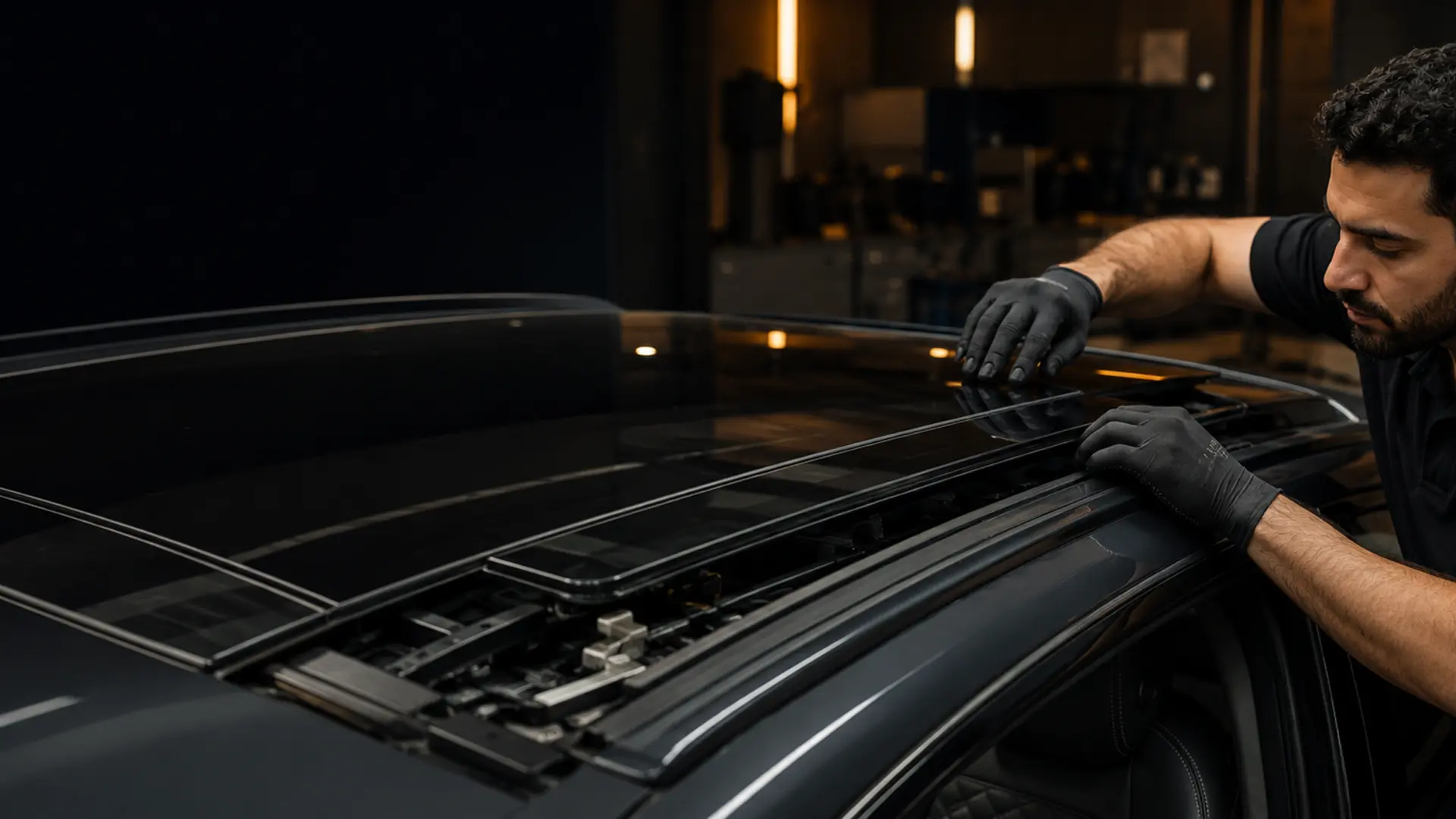
Audi sunroof repair in Dubai
Audi sunroof repair starts with the leak, movement or shade fault. Book an inspection in Al Quoz 4 to check the drains, mechanism and controls before choosing the parts your roof needs.
Audi sunroof repair can range from a controlled drain clean or panel adjustment to guide, cable, motor, shade, glass, seal or headliner work. The quickest way to choose the right repair path is to start with the roof’s actual behaviour, because the same visible symptom can have a mechanical, water-management, electrical or trim-related cause.
What is wrong with your sunroof?
A useful booking does not need a part name. Tell us what changed, where the roof stopped and when the problem appears. That information decides whether the first check should follow water, movement, trim or electrical control.
Water or damp trim
Photograph the first stain, drip or damp edge. Water above the front seats, around a pillar, behind the rear headliner or in a footwell can follow different paths. Note whether it appears during rain, after washing, on a slope or only after the car has been parked.
Glass stuck or uneven
State whether the panel is closed, tilted, partly open or dropped on one side. A roof that tilts but will not slide is different from a panel that moves slowly, reverses, clicks or becomes uneven. Stop repeatedly cycling it if the movement has changed.
Shade or headliner problem
A loose fabric edge, sagging roof lining, jammed roller and powered panoramic shade fault are not one repair. Show whether the fabric is detached, the roller has lost tension, the shade is skewed or the motor can still be heard.
Noise or damaged glass
Wind noise with the roof closed can involve panel height, seal contact, the deflector or nearby trim. Clicking or grinding during operation points elsewhere. Cracked glass, loose trim or a panel that cannot close should be described when the booking is made.
Protect a stuck or leaking roof
A few careful steps can limit extra damage and preserve information that helps the first inspection. The aim is not to dismantle or seal the roof at home. It is to keep the mechanism and cabin in a condition that can still be diagnosed.
If the panel or shade binds, moves unevenly or clicks, stop operating it. Repeated motor load can damage guides, carriers or cables and can leave the glass in a less secure position. Do not push one corner down by hand unless a technician has given a model-specific instruction.
For water entry, photograph the first wet area before wiping it. Record the weather, washing method, parking angle and delay between exposure and the first drip. Remove standing water where it is safe to do so, but do not cover drain entrances or apply silicone, tape or adhesive that can contaminate paint and trim.
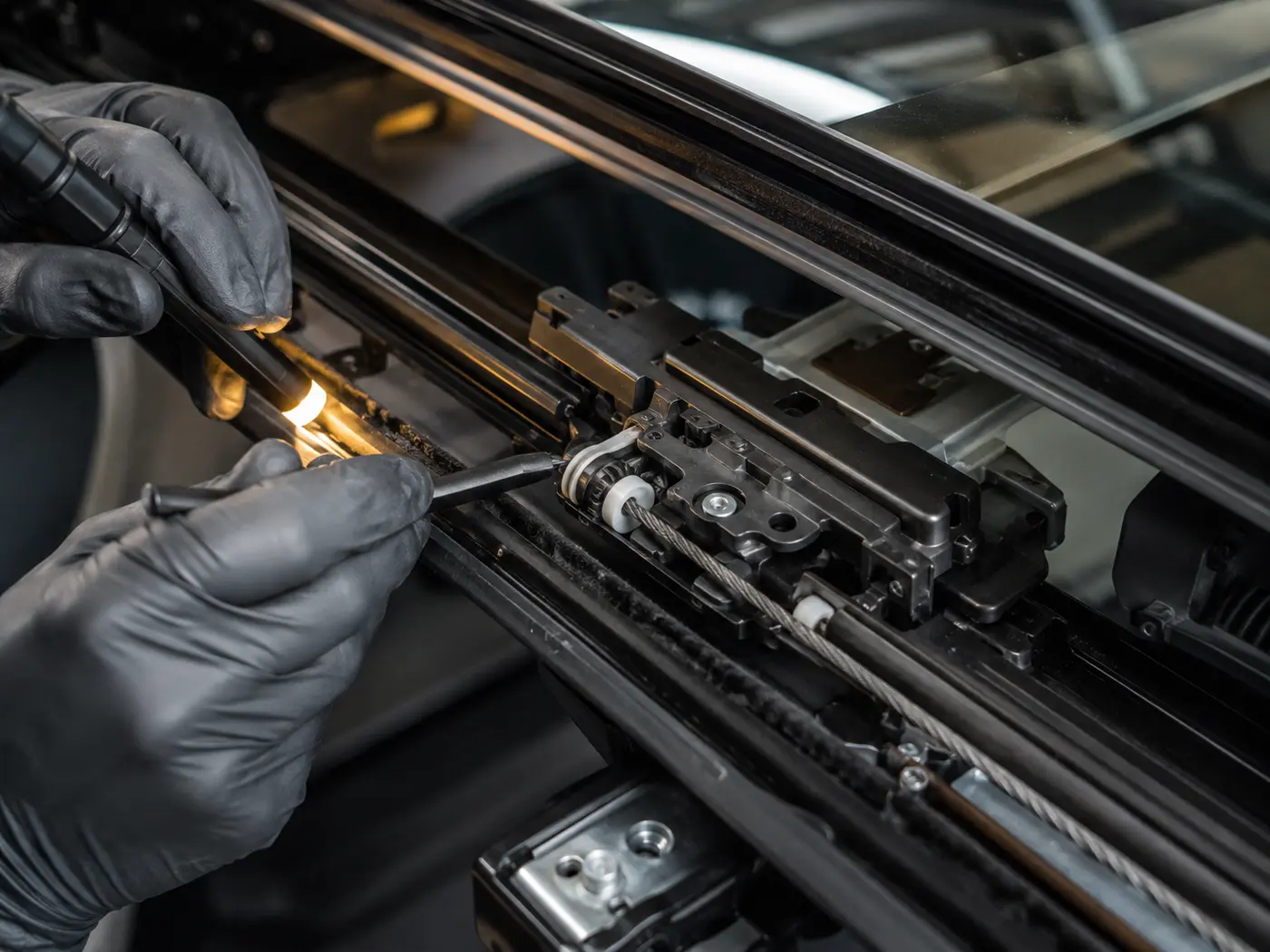
Inside your panoramic roof
The visible glass is only the upper layer. Audi roof equipment varies by model, generation and option, but a panoramic assembly can combine a moving front panel, fixed rear glass, cassette, guide rails, cables, carriers, motor, wind deflector, shade, drains, controls and interior trim.
That is why a damp headliner does not automatically prove the outer seal has failed, and a silent motor does not automatically prove the motor itself is defective. Water can travel along a cassette edge or hose. A panel can stop because a guide binds. A control can stop movement when the mechanism detects excessive load.
Perimeter contact, cassette channels, drain entrances, hoses and body outlets manage the water that reaches the opening.
Rails, guides, carriers, cables, mounts, motor drive and deflector position determine how the panel lifts, slides and closes.
Fabric, roller, powered shade components, switches, power supply, control logic and learned positions affect comfort and operation.
Headliner backing, clips, pillar trim, insulation and nearby wiring can be damaged by water or by unnecessary dismantling.
Find where the water enters
Sunroof channels are designed to guide limited water towards drains. A blocked entrance is one possible cause, but a disconnected hose, damaged cassette, poor panel fit, nearby glass bond or body seam can produce a similar wet area inside the car.
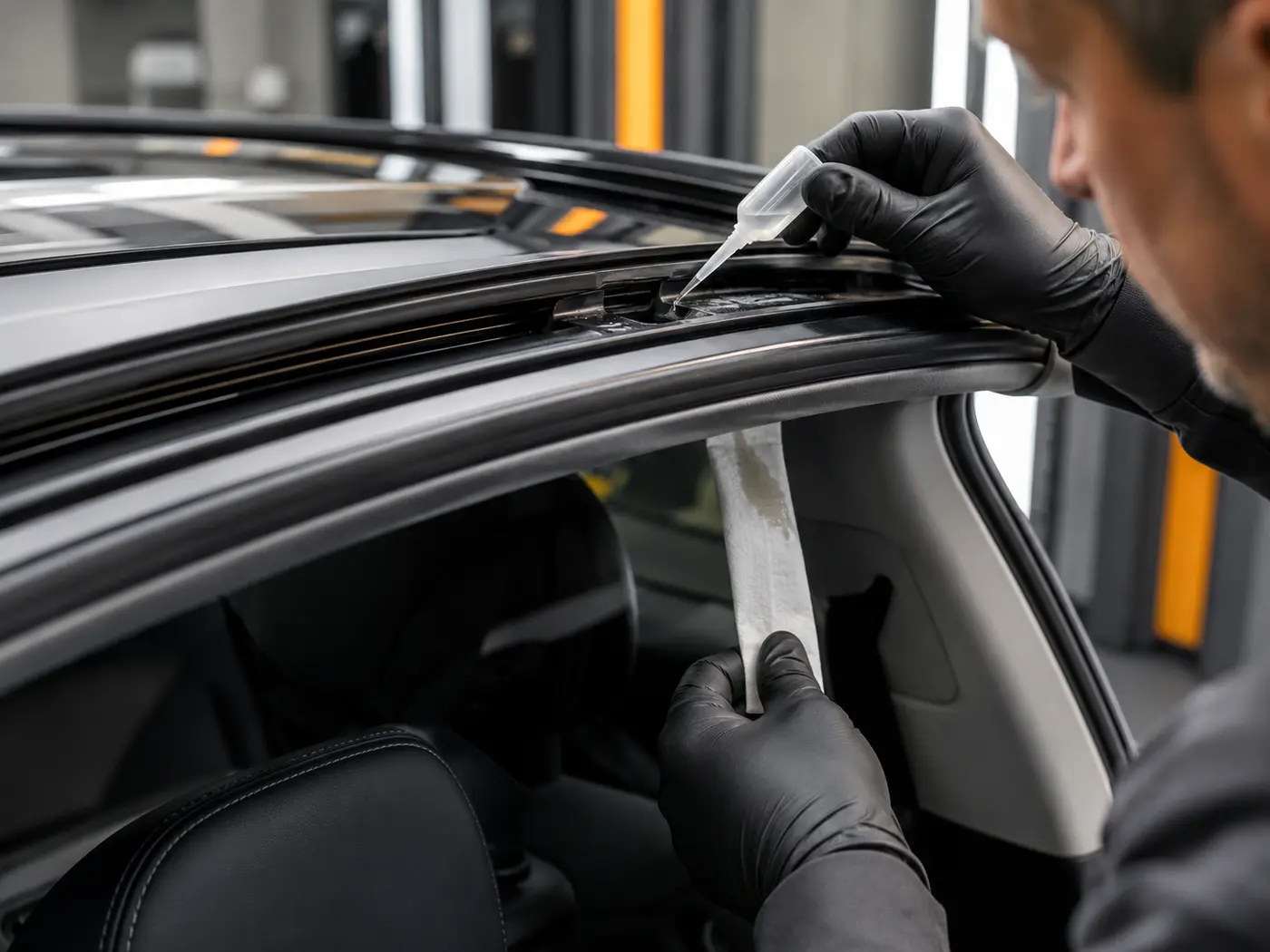
A controlled test adds water to one area at a time and watches the expected discharge and interior route. Flooding the complete roof can obscure the first entry point. High air pressure can move debris or separate a hose, so cleaning and flow checks must be controlled.
Map the first wet area
We record the first stain or drip, the direction it travelled, the weather or wash condition, parking angle and any previous roof, glass, trim or body work.
Inspect the opening and trim
Visible channels, drain entrances, panel height, seal contact, debris, disturbed trim and signs of old adhesive help narrow the first test area.
Check the drain route
Where appropriate, we use a controlled volume and observe discharge at the correct outlet. Slow flow, no flow or water appearing inside leads to a different next check.
Test adjacent entry points
If the roof route behaves normally, the windscreen bond, door sealing, body seams and other nearby paths are considered before a sunroof part is condemned.
Repeat the original condition
After correction, the relevant route is tested again and the interior is checked for remaining moisture. Stopping entry and drying the cabin are separate parts of a complete repair.
Water can enter beside the roof
The place where water becomes visible is an important clue, but it is not always the point where water entered. Pillar trim, insulation, wiring tape and the angle of the parked car can carry moisture away from the original route.
Water near the front pillar or footwell can come from a sunroof drain or cassette, but it can also come from the windscreen bond, door membrane, weatherstrip, body seam or air-conditioning drain. Rear headliner staining can involve a rear drain, fixed panoramic glass area, tailgate region or disturbed trim.
We compare the wet pattern with each possible path rather than replacing the easiest visible seal. That protects the customer from paying for a roof part when the real source is adjacent to it, and it avoids blaming a recent windscreen or body repair without a repeatable test.
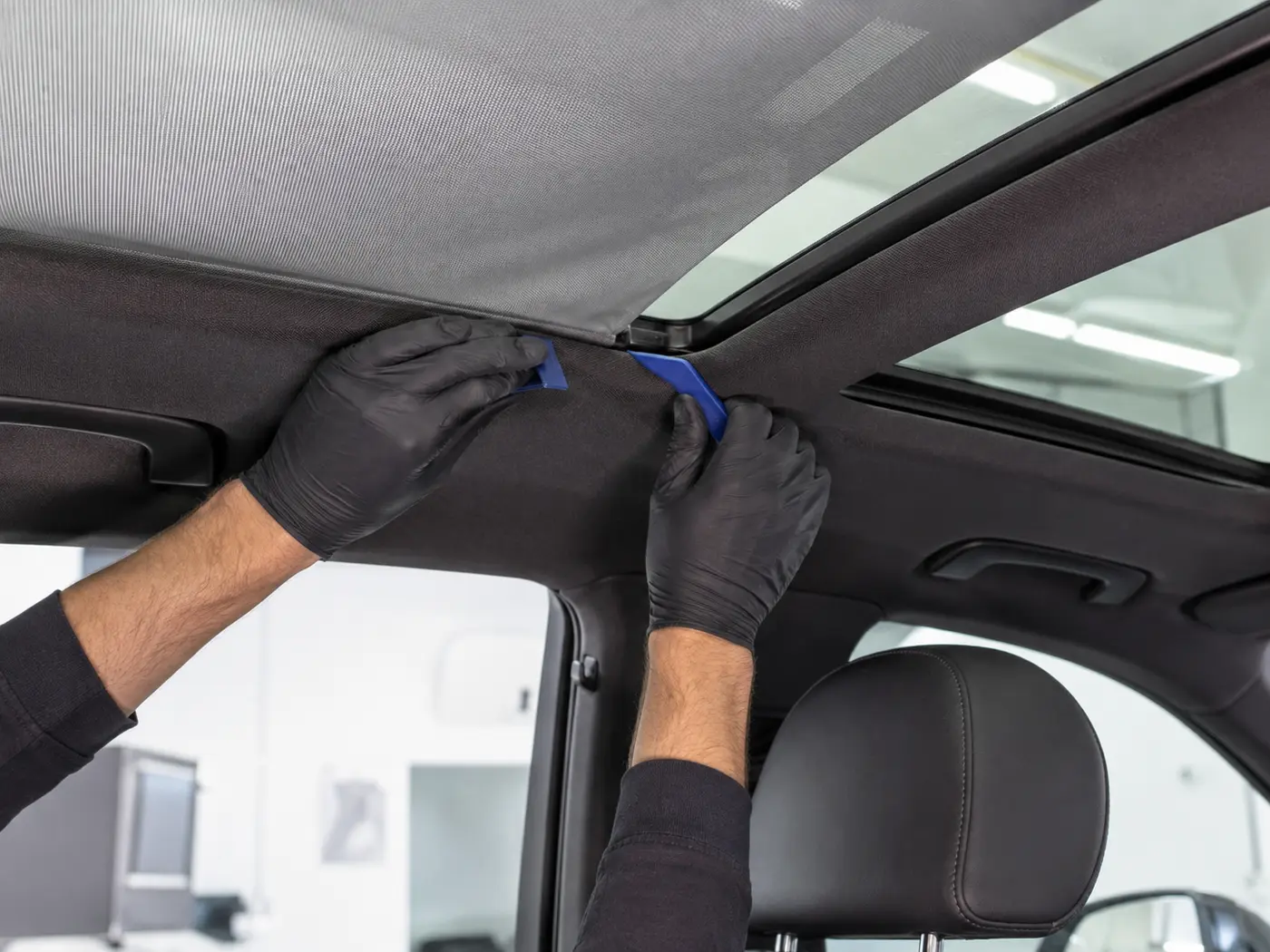
Dry the cabin after a leak
A repaired water entry point does not immediately remove moisture trapped in headliner backing, pillar trim, insulation, carpet or connectors. The visible fabric can feel dry while material behind it remains damp.
The response depends on the amount of water, how long it remained, whether odour or staining has developed and which components sit in the path. A recent, small leak may need controlled drying and cleaning. Saturated backing, detached headliner material, damaged clips or contaminated trim can require removal and restoration.
Electrical behaviour that began with the leak should be recorded before fault memories are cleared or connectors are disturbed. Moisture can travel along a harness and appear away from the roof opening. A nearby switch or controller should not be replaced merely because it is close to a stain.
- Recheck the corrected water route
- Inspect the headliner backing and attachment
- Assess pillars, insulation and carpet for retained moisture
- Record related electrical warnings or intermittent behaviour
- Dry, clean or restore only the material that needs it
Repair or replace the damaged part?
The sensible repair depends on access, wear, breakage and secondary damage. The table shows common directions, not a diagnosis made before the car is inspected.
| What we find | Possible repair direction | What must be confirmed |
|---|---|---|
| Restricted drain entrance | Careful cleaning and flow verification may be enough when the hose, connection and cassette remain sound. | The restriction is visible or repeatable, water reaches the correct outlet and no interior leak remains. |
| Panel height or alignment is incorrect | Adjustment may restore sealing, wind-noise control and movement when mounts, guides and carriers are intact. | Glass height, contact pattern, fasteners, guide condition and smooth travel through the full operating range. |
| Guide, carrier or cable is damaged | The damaged drive part or a larger mechanism section may need repair or replacement depending on the roof design. | Uneven travel, binding, debris, cable condition and damage revealed after the correct access is created. |
| Motor does not operate | Power, ground, switch input, control commands, obstruction and learned positions are checked before motor replacement. | The mechanism can move correctly and the motor is receiving the conditions needed to operate. |
| Panoramic shade is loose or jammed | Fabric, roller, side guides, carriers or the powered shade assembly are assessed separately. | Attachment, tension, tracking, roller movement, heat damage and whether the electrical drive still responds. |
| Roof glass or seal is damaged | Correct glass, seal or mounting parts may be required, followed by fit, movement and water checks. | Exact roof option, part identification, surrounding frame condition and the cause of the damage. |
| Cassette or hose connection leaks | Local repair may be possible in some positions; deeper access or cassette-level work may be required in others. | The exact entry point, available access, condition of adjacent parts and whether previous work has altered the assembly. |
| Headliner remains stained or loose | Drying, cleaning, local trim work or headliner restoration follows correction of the water source. | Moisture level, backing condition, adhesive failure, clip damage and the extent of visible staining. |
Sunroof repairs and replacement options
The booking begins with the symptom and roof configuration. The approved job may be a focused adjustment or a larger panoramic roof repair, but the scope is agreed only after the relevant checks.
Focused roof repairs
Drain cleaning and testing, glass-height adjustment, wind-deflector checks, minor trim correction, electrical testing and appropriate initialization may be completed without removing the complete cassette when the fault and access allow it. The roof is still operated and retested through the condition that originally produced the complaint.
- Controlled drain flow checks
- Panel position and contact adjustment
- Switch, supply and motor-command tests
- Wind-noise and trim-fit inspection
Deeper panoramic roof work
Broken guides, carriers, drive cables, shade assemblies, damaged glass, leaking hose connections or cassette faults can require headliner access and exact replacement parts. Before dismantling begins, we explain which trim must be removed, what may be reusable and which risks or additional findings are connected to the approved work.
- Guide, carrier and cable access
- Panoramic shade and roller work
- Roof glass and seal replacement
- Cassette, hose and headliner access
Inspection, repair and final checks
The sequence is designed to identify the likely fault area before unnecessary trim or roof components are removed. You receive the proposed scope before the repair moves beyond the approved inspection.
We note the symptom, timing, current roof position, water pattern and recent battery, glass, trim or body work.
The Audi model, production details and installed standard or panoramic roof equipment are identified.
Visible alignment, channels, seals, shade, trim and movement are checked before repeated switch operation.
Water, mechanical movement or electrical control is tested according to the complaint rather than through a generic parts list.
Access, parts, related trim work and any uncertainty that remains are explained before deeper work begins.
The roof is operated or leak-tested again in the condition that matters, and remaining cabin moisture is assessed.
Audi sunroof repair cost
A reliable quotation separates a simple accessible correction from mechanism, glass, cassette or interior work. Photos and vehicle details help us prepare, but the final scope depends on the exact roof and the cause found during inspection.
Standard or panoramic
Panel count, glass size, shade design, motor arrangement and cassette construction change access, labour and part identification.
Cleaning or dismantling
A visible drain restriction or panel adjustment is different from reaching a cable, carrier, motor, hose connection or complete roof cassette.
Glass, shade and mechanism
The part route depends on VIN, roof option, supersession, availability and whether a component can be replaced separately on the installed assembly.
Water and interior damage
Drying, cleaning, electrical inspection, headliner removal, damaged clips and previous adhesive or trim work can add to the approved repair.
Keep drains and tracks clear
Check visible debris
Leaves, grit and dust around the opening should be removed gently when the roof can be operated normally. Follow the maintenance information for the fitted roof. Do not push wire into a drain, flood the opening or use high-pressure air to clear an unknown blockage. Damage to a hose connection can turn a small restriction into an interior leak.
Use only the specified cleaning and lubrication products for the relevant surfaces. Grease applied to the wrong seal or channel can collect dirt or affect material compatibility. A noisy roof should be inspected before lubricant is used to disguise the symptom.
Watch for a returning symptom
After rain or washing, check the area that was originally wet. Report another stain, a delayed drip, changed movement or a new rattle. Retained moisture may need further drying, but a returning leak should be tested again rather than assumed to be leftover water.
If testing points to the adjacent bonded glass, our Audi windshield replacement service covers the glass and sealing work. For unsecured glass or a roof that makes travel unsafe, discuss Audi roadside assistance and recovery before setting off.
Audi’s technical bulletin on panoramic roof perimeter seals shows why a leak or wind noise is not always a blocked drain. It concerns specified vehicles and procedures; your VIN and installed roof must be checked before applying that repair.
Plan your sunroof appointment
Send the model, year, current glass position and a photo of the problem before your visit. Mention recent battery disconnection, glass replacement, body repairs or headliner work. A photograph can help plan access and parts identification, but it cannot confirm a hidden cable, drain connection or cassette fault.
A leak that appears only after extended rain, washing or parking on a slope may need the car to remain for testing and drying. Mechanism repairs can also depend on part availability and the amount of trim that needs removal. Confirm the expected collection time once the fault and approved work are known.
Audi sunroof repair questions
Why is water entering through my Audi sunroof?
Possible causes include a restricted drain entrance, displaced or damaged drain hose, cassette leak, incorrect panel height, damaged seal contact or water entering from a nearby windscreen, door or body route. The place where water appears is not always the entry point, so the route should be reproduced and tested before parts are ordered.
Can a blocked Audi sunroof drain be cleaned?
Often it can, but the drain route and connection should be considered first. Controlled cleaning followed by a flow check is safer than forcing debris with excessive compressed air, which can move the blockage or separate a hose. If flow returns but the cabin still becomes wet, another entry point must be investigated.
Why does the roof tilt but not slide?
A partial movement fault can involve an obstruction, uneven guide or carrier movement, cable damage, synchronization, motor protection or an incorrect learned position. The point where movement changes and whether one side lifts differently help direct the mechanical and electrical checks.
Can a panoramic roof shade be repaired separately?
It depends on the installed shade and the damage. Detached fabric may be different from a failed roller, guide, carrier or powered shade drive. We inspect attachment, tension, tracking and motor behaviour, then explain whether a local repair, separate component or larger shade assembly is the practical route.
Does a noisy sunroof need complete replacement?
No. Wind noise can come from glass height, seal contact, the wind deflector or trim fit. Clicking, snapping or grinding during movement can involve guides, carriers, cables or the motor drive. The noise should be reproduced and located before replacement scope is decided.
Can the sunroof need initialization after a battery event?
Some roof systems can lose or interrupt learned positions after low voltage, battery disconnection or an obstruction event. Initialization may be appropriate only after the panel can move freely and power, controls and mechanical condition have been checked. A basic setting will not repair a broken guide or cable.
How are the correct Audi roof parts identified?
We use the vehicle identity, installed roof equipment and original component information, then check part numbers and applicable supersessions. Model and year are useful, but they may not be enough where glass, shade, motor or mechanism options differ within the same model range.
Should I keep operating a jammed Audi sunroof?
No. Repeated operation can load a damaged guide, carrier or cable and may leave the glass in a less secure position. Stop forcing it, protect the interior without blocking drains or applying damaging adhesive, and tell the workshop whether the roof is open, tilted or uneven.
Book your sunroof repair
Call first for an urgent open or cracked roof. For a normal booking, send the Audi model, year, current glass position, wet area and a clear photo or short video. We will prepare the appointment around leak, movement, shade, glass or trim diagnosis.