
Audi water pump repair and replacement in Dubai
Coolant loss, a temperature warning or a pump fault does not identify one failed part. We pressure-test the circuit, trace the leak, check pump operation, thermostat control and surrounding housings, then define the smallest dependable repair.
Direct answer An Audi water pump may need replacement when it leaks, develops bearing play, loses circulation or an electric unit fails its commanded operation. The same symptoms can also come from a thermostat housing, coolant flange, hose, radiator, fan, sensor or trapped air, so diagnosis comes before ordering the pump.
Cooling warnings need context
The warning, leak pattern and temperature behaviour determine whether the Audi should be driven, inspected immediately or recovered without further running.
Coolant level keeps falling
A repeated low-coolant message can follow a small external leak that appears only when the circuit is hot and pressurised. Pump and thermostat housings, seals, flanges, hoses and the radiator all need inspection.
Temperature rises in traffic
Poor circulation is one possibility, but fan operation, thermostat control, coolant level, air in the circuit and radiator heat transfer also change low-speed temperature behaviour.
Steam or a red warning appears
Stop where it is safe, switch the engine off and arrange advice. Continuing with active overheating or heavy coolant loss can extend a cooling-system fault into engine damage.
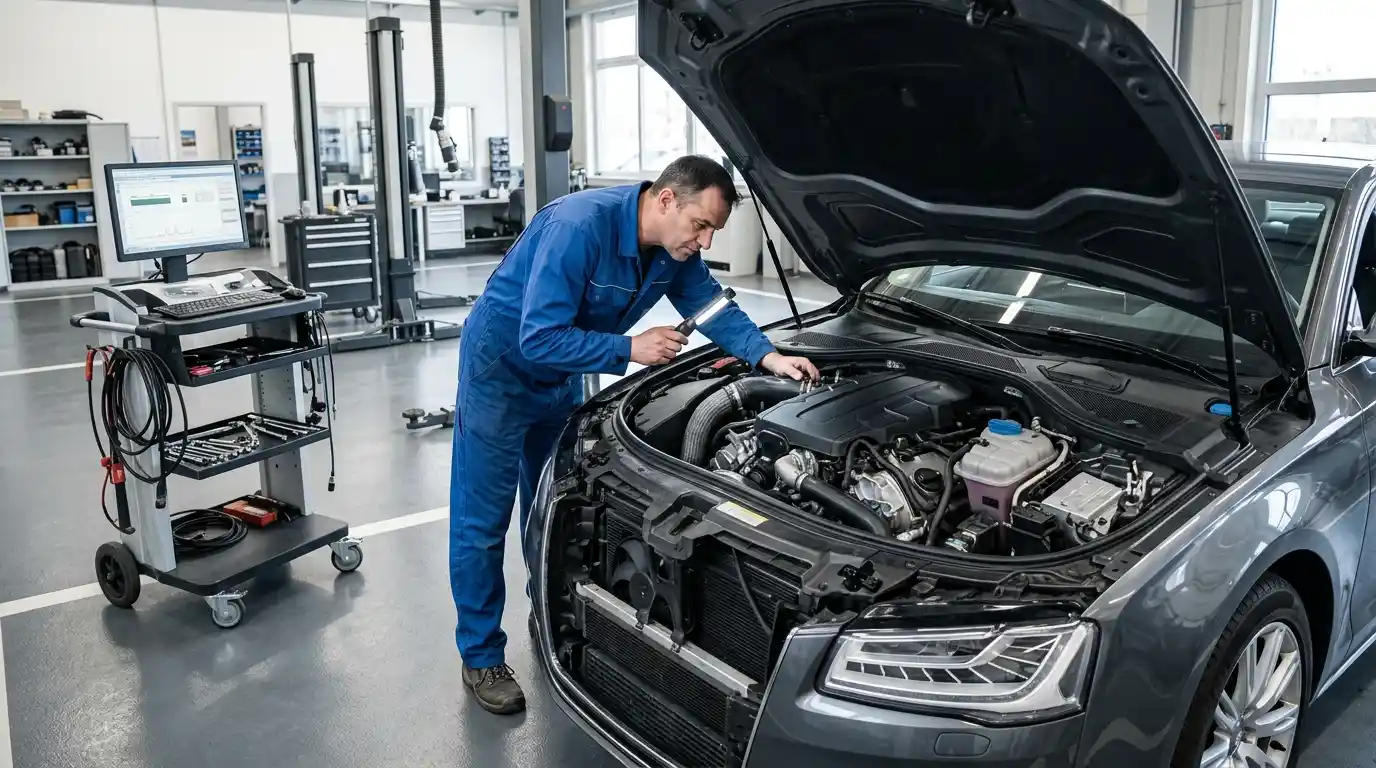
The leak source comes first
Coolant travels across covers and undertrays. The wettest visible point is not always where the leak began.
We begin with the coolant level and condition, warning history and a visual inspection of accessible connections. A controlled pressure test can reveal seepage around the water pump, thermostat module, housing seams, hose connections, coolant flanges or radiator. Dried pink or white residue can show an older leak even when the area is no longer wet.
Engine temperature data and the conditions that trigger the complaint help separate a loss of coolant from a circulation or control problem. An electric pump also needs its power supply, ground, connector, command and response checked. Replacing a pump cannot repair damaged wiring or a fault elsewhere in the circuit.
- Cold coolant level and visible residue
- Pressure loss and the first wet point
- Pump noise, play and circulation evidence
- Thermostat and cooling-fan behaviour
- Fault codes interpreted with live conditions
Similar symptoms lead to different repairs
This matrix keeps the repair tied to evidence. It prevents a visible puddle or fault code from being treated as automatic proof of a failed water pump.
One Audi can use more than one pump
The exact layout depends on the engine and vehicle equipment. The main coolant pump, electric circulation pumps and combined thermostat housings do different jobs and are not interchangeable repair terms.
Main coolant pump
Moves coolant through the engine circuit. Depending on application, it may be mechanically driven, electrically controlled or part of a larger module.
Thermostat module
Controls routing as temperature changes. A sticking thermostat and a leaking pump can create different faults even when housed close together.
Auxiliary circulation pump
Supports a specific circuit or operating condition. Its function, location and control strategy vary, so the vehicle specification matters.
Seals and housing joints
An O-ring, gasket or plastic housing seam can be the actual leak path. Access and part availability decide whether the repair is local or modular.
Hoses and coolant flanges
A hose connection can drip onto the pump area and imitate a pump leak. Brittle connectors and disturbed seals are checked before reassembly.
Sensors and control wiring
Temperature sensors, connectors and control circuits influence warnings and electric-pump behaviour. Electrical faults need circuit evidence.
Repair the leak, not the assumption
Water-pump work may mean replacing a complete sealed pump, renewing a serviceable seal, repairing a connector or addressing a combined pump and thermostat unit.
A noisy bearing, damaged impeller or failed electric motor normally points toward component replacement. A leak at an accessible O-ring or adjoining connection may have a smaller scope when the housing and pump test correctly. Some assemblies are supplied only as combined modules, which changes the parts and access involved.
We identify the part by vehicle data and physical comparison before installation. The quotation should state whether it includes the pump, thermostat or housing, seals, required coolant, access work and final bleeding and testing. That makes a comparison useful instead of placing unlike repairs under the same label.
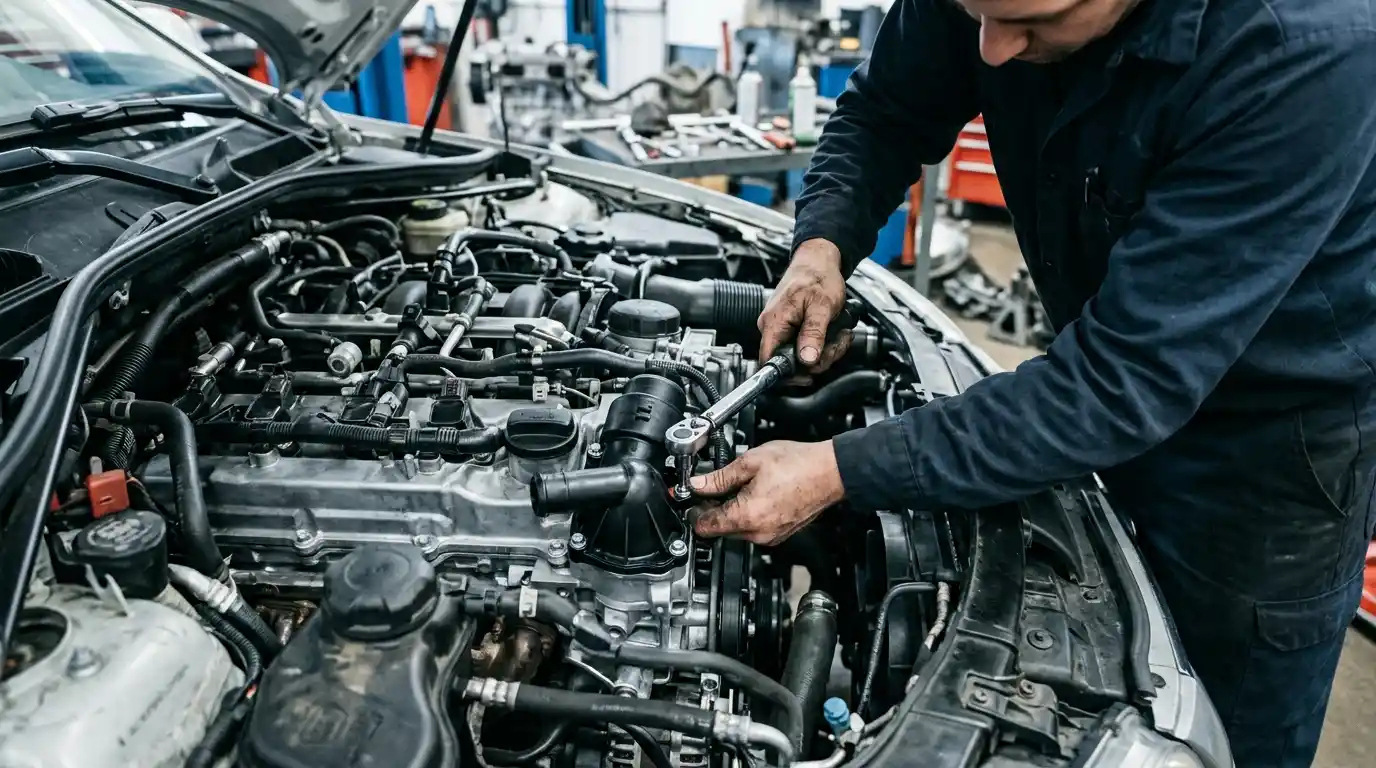
The failed layer changes the work
These are repair categories, not automatic conclusions. Access, engine layout and the confirmed failure decide the final scope.
| Confirmed condition | Likely work | Checks before approval |
|---|---|---|
| External seal or joint leak | Renew the serviceable seal or adjoining connection when the component remains sound. | Housing condition, mating surface, access, connector and whether the seal is supplied separately. |
| Pump bearing, impeller or motor failure | Replace the affected pump or complete supplied module. | Correct pump specification, drive type, related housing and evidence of secondary damage. |
| Combined pump and thermostat fault | Replace the combined module where the parts are integrated or both faults are proven. | Exact part configuration, temperature evidence, connectors and required seals. |
| Wiring or connector fault | Repair the circuit if the pump itself passes mechanical and commanded-operation checks. | Terminal condition, supply, ground, command, load behaviour and moisture source. |
| Overheating with wider damage | Repair the cooling fault and assess the engine separately before assuming the pump completes the job. | Heat history, coolant contamination, compression-related evidence and oil condition where justified. |
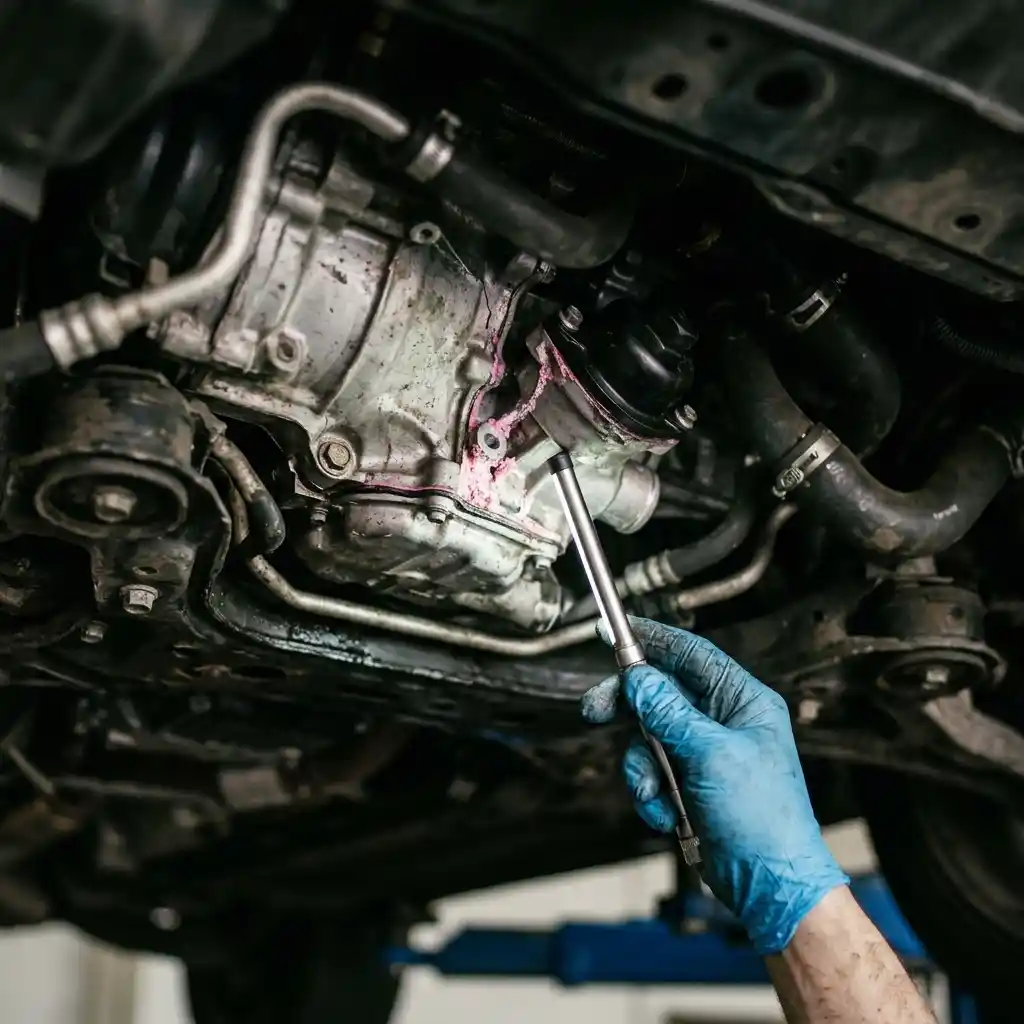
Overheating can widen the diagnosis
A pump leak repaired early and an engine driven while severely hot are not the same job.
We ask what warning appeared, how long the engine ran, whether steam was visible, how much coolant was added and whether performance changed. That history determines whether the inspection can remain within the external cooling circuit or should include checks for consequences of overheating.
Evidence may justify inspecting oil and coolant condition, persistent pressure, combustion-related symptoms or uneven engine operation. These checks are not added automatically to every water-pump job. They are used when the heat event or post-repair behaviour makes them relevant.
If the problem is primarily a leak elsewhere in the circuit, the dedicated Audi coolant leak repair service explains the wider tracing process. Radiator damage and airflow concerns belong to Audi radiator repair.
From cold test to stable temperature
The sequence protects the diagnosis from heat, hidden residue and incomplete bleeding.
Record the warning
Confirm coolant loss, temperature behaviour, previous repairs, top-ups and the conditions that reproduce the complaint.
Inspect the circuit cold
Check level, residue, hoses, housings, pump area, radiator and expansion components before disturbing the evidence.
Test pressure and operation
Trace the first leak point and test mechanical or electric pump behaviour with temperature and circuit evidence.
Approve the exact scope
Identify the pump or module, required seals, access work, coolant and any related thermostat or wiring repair.
Install and refill correctly
Protect connectors and sealing faces, assemble the circuit, use the correct coolant specification and remove trapped air.
Verify the complete circuit
Recheck pressure, leaks, temperature stability, heater performance, fan operation and relevant pump commands.
Electrical evidence changes the repair
An electric coolant pump can be mechanically sound but inactive because its supply, connector or command is missing.
Testing begins at the correct pump, because an Audi may contain more than one electric circulation unit. We confirm the connector and circuit, inspect for coolant or corrosion, check supply and ground under the relevant condition, and compare the requested operation with the pump response.
An intermittent pump can behave normally after the engine cools or after the connector is moved. That is why stored faults, operating conditions and physical wiring evidence matter. Replacing the unit without checking the circuit risks leaving the same fault in place.
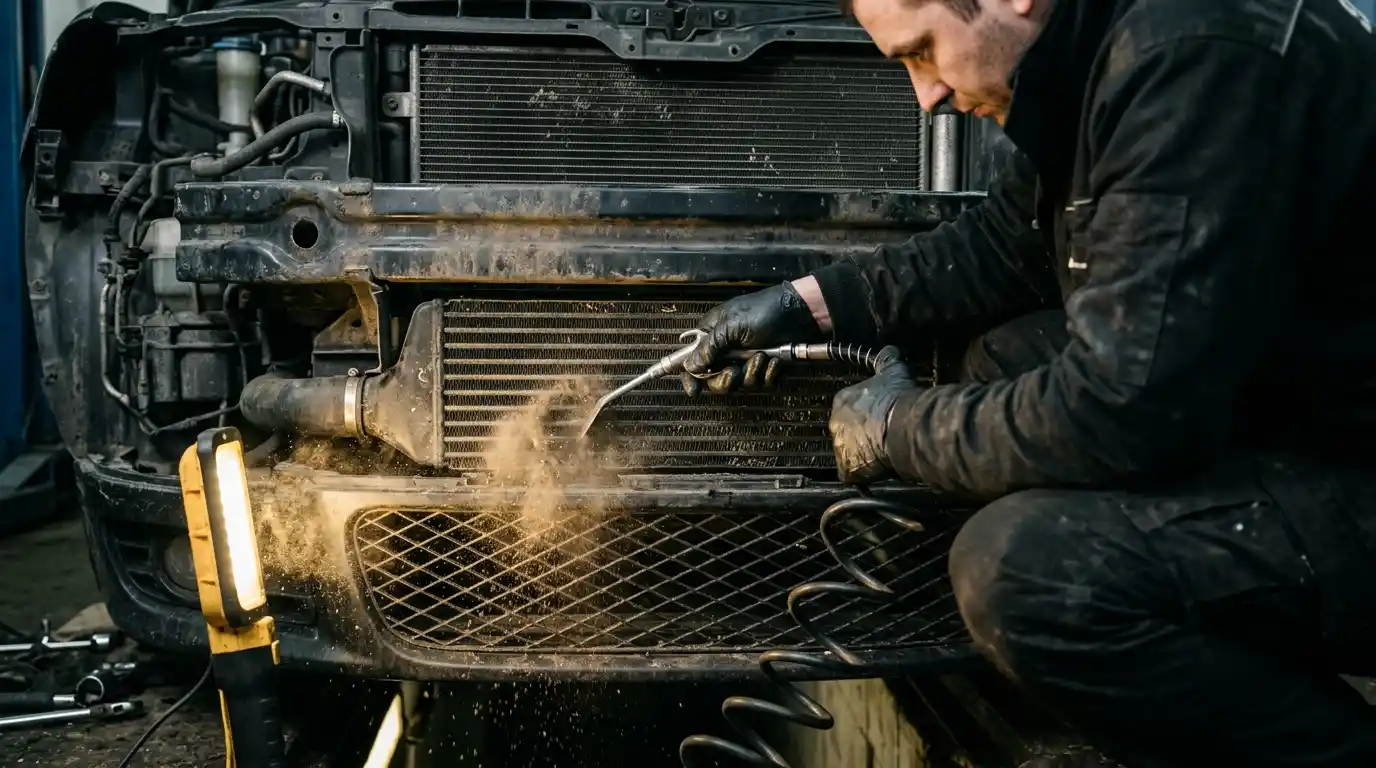
What changes the installed cost
There is no honest single price for every Audi water pump. The exact part, access, connected components and heat history change the quotation.
Pump or combined module
A separate pump differs from an integrated pump and thermostat housing in parts, seals and access.
Engine packaging
Covers, intake parts, drive components or other assemblies may need removal to reach the confirmed leak.
Hoses, flanges and wiring
Brittle connections, damaged terminals or a second leak can extend the repair beyond the pump itself.
Coolant and bleeding
Correct refill, air removal, temperature checks and a final leak inspection belong in the installed scope.
A dry workshop floor is not enough
The repair must hold pressure and control temperature after the coolant circuit has been filled and air has been removed.
We inspect the repaired area during and after warm-up, monitor relevant temperature behaviour and confirm the heater and cooling fans respond normally. Electric pumps are checked under the conditions in which they are expected to operate. The coolant level is rechecked after the circuit stabilises.
If the original complaint appeared only after a longer drive, at idle or after shutdown, verification needs to reflect that pattern where practical. A leak that develops only as components expand can be missed by a quick cold inspection.
Coolant specification also matters. The Audi fluids and specifications guide explains why colour alone does not identify a suitable fluid.
Audi water pump FAQs
Can an Audi water pump be repaired instead of replaced?
It depends on what failed and how the component is supplied. An accessible seal, connector or adjoining joint may have a smaller repair scope. A failed bearing, impeller, electric motor or sealed pump assembly normally requires replacement of the affected unit.
What are the common signs of an Audi water pump problem?
Repeated coolant loss, residue around the pump or thermostat area, a leak under the car, bearing noise, unstable temperature, overheating or an electric-pump fault can justify inspection. None of these signs proves the pump without checking the rest of the circuit.
Can I drive with a leaking water pump?
Driving risk depends on the leak rate, coolant level and temperature behaviour. Do not continue if a red temperature warning, steam, heavy coolant loss or rapid overheating appears. Call and describe the condition before running the engine again.
Does every Audi use the same type of water pump?
No. Pump drive, location, control and whether it is combined with a thermostat housing vary by engine and model. Some vehicles also use separate electric circulation pumps for particular circuits.
Does a water pump fault always create a warning light?
No. A small external leak or mechanical wear can develop before a specific fault is stored. An electric-pump circuit problem may create a code, but the code still needs to be matched with command, supply and physical operation.
Why is the thermostat checked during water pump diagnosis?
The thermostat controls coolant routing and may be located beside or within the same module as the pump. A thermostat fault can produce temperature symptoms that resemble poor circulation, and a shared housing can alter the replacement scope.
What information should I send before booking?
Send the Audi model and year, engine if known, the exact warning message, when the temperature changes, how often coolant is added and photographs of any visible residue or puddle. Mention any recent cooling-system work.
How is the cooling system checked after replacement?
The circuit is refilled and bled, the repaired area is inspected under pressure and temperature behaviour is monitored. Relevant pump commands, heater output and cooling-fan operation are checked according to the original complaint and vehicle configuration.
Send the warning before ordering a pump
Call the workshop or share the Audi model, year, warning message, leak location and heat history. We will arrange the right first inspection and separate the pump from thermostat, housing, hose, radiator and electrical faults.