
Confirm the leak before major access work
Audi Rear Main Seal Replacement in Dubai
Audi rear main seal replacement should begin with evidence, not with gearbox removal. Oil near the engine and transmission joint may come from the rear crankshaft seal, but it can also track down from a valve cover, vacuum pump, filter housing, cooler, sump joint or previous spill. Our Al Quoz 4 workshop identifies the fluid, traces the highest fresh wet point and plans access for the exact Audi before recommending this labour-intensive repair.
The component and the clue
What a rear main seal leak actually means
The rear main seal surrounds the rear end of the crankshaft where it exits the engine beside the transmission bellhousing. It retains engine oil while allowing the crankshaft to rotate. Depending on the engine family, the sealing element may be supplied alone or as part of a carrier assembly. That distinction affects part selection, installation method and the surfaces that must be inspected once access is available.
A confirmed leak can leave fresh engine oil inside or below the bellhousing, lower the engine-oil level and contaminate nearby parts. A manual-transmission Audi may develop clutch contamination, while an automatic or dual-clutch vehicle presents a different set of connected components. The location is expensive to reach, so a stain at the bottom of the engine is not enough evidence on its own.
Undertrays and airflow can move oil rearward and sideways. Oil descending from an upper cover or housing may collect at the engine and gearbox joint, making the rear seal appear guilty because it is the lowest hidden point. A useful diagnosis therefore asks where fresh oil begins after the area is cleaned, not simply where the largest stain ends.

Evidence before removal
Five checks protect the repair decision
Gearbox separation should follow a connected body of evidence. Each check narrows the diagnosis and prevents unrelated engine-oil or transmission-fluid leaks from being grouped under one label.
Record the pattern
Note when the mark appears, how quickly the oil level changes, whether the car was recently serviced and whether warning messages, smoke or clutch behaviour changed at the same time.
Decision value
Defines urgency and gives the technician a condition to reproduce rather than a vague description of an old stain.
Identify the fluid
Engine oil, gearbox lubricant, coolant and water have different appearance, smell, viscosity and likely travel paths. Mixed residue may require cleaning before classification is reliable.
Decision value
Separates an engine sealing problem from a transmission-side leak or unrelated liquid.
Find the highest wet point
Inspection works from the upper engine down through cover, pump, housing, cooler, turbo-line, timing-cover, sump and rear-interface areas where applicable.
Decision value
Shows whether oil is arriving from above before the hidden rear seal becomes the working diagnosis.
Clean and reproduce
After safe cleaning, the vehicle is observed during appropriate stationary operation and, where suitable, after a controlled drive or heat cycle. Dye may assist a slow leak but does not replace path interpretation.
Decision value
Distinguishes fresh movement from residue left by a previous leak, repair or spill.
Check contributing systems
Crankcase ventilation context, sealing surfaces and recent engine or gearbox work matter. Abnormal crankcase pressure can contribute to leakage or an early repeat failure on applicable engines.
Decision value
Prevents a new seal from being treated as the whole repair when a connected fault remains.
Symptoms are clues
What the observation can and cannot prove
One symptom does not identify one failed component. The useful question is what confirming evidence separates the competing causes.
| What you notice | Possible causes | Evidence that changes the direction |
|---|---|---|
| Fresh oil below the bellhousing | Rear crankshaft seal, seal carrier, sump-to-block joint, upper-engine leak or old residue trapped by covers | Cleaning and controlled recheck show where the first fresh engine oil emerges, with higher sources inspected first |
| Burning-oil smell after driving | Oil reaching a hot exhaust surface from a valve-cover area, turbo oil line, spill, rear-engine leak or another source | A visible fresh trail connects the wet source to the hot contact point; smell alone does not locate the seal |
| Clutch slip on a manual Audi | Normal clutch wear, hydraulic issue, engine-oil contamination or gearbox-input seal leakage | Fluid identification and inspection after access show whether contamination exists and which side supplied it |
| Oil level falls without a puddle | Leak retained by the undertray, oil consumption, several small leaks or a leak that appears only hot | A consistently measured level trend, cleaned underbody, operating-condition check and broader engine assessment where needed |
| Wetness returns after earlier seal work | Installation problem, sealing-surface condition, carrier issue, crankcase pressure concern or an incorrectly identified original source | Fresh-path mapping plus review of parts, installation context and connected systems before repeating the same repair |
Workshop diagnosis
How the leak source is confirmed
The sequence moves from low-cost evidence to high-access work. A scan can support a wider engine assessment, but there is no universal fault code that proves a mechanical rear main seal leak.

Interview and oil-level context
We record the first observation, parking pattern, dashboard wording, recent oil or powertrain work and any top-ups. The correct oil-level checking method varies by Audi and may use an electronic display, a service procedure or a physical measurement point.
Undertray and contamination map
Lower covers are removed or opened as appropriate because they collect and spread fluid. Wet areas are documented before cleaning so the technician can compare old contamination with the path that returns later.
Top-to-bottom source inspection
The examination starts at the highest plausible leak. Depending on the engine, this can include cam and valve-cover areas, vacuum pump, oil filter or cooler housing, turbo feed and return connections, timing or rear covers, sump perimeter and the engine-transmission joint.
Fluid confirmation and controlled cleaning
The residue is classified, affected surfaces are cleaned safely and any mixed fluids are separated. Dye can be useful for a slow or ambiguous leak when used with a known fluid and a clear observation period.
Operating-condition recheck
The engine is observed only under conditions that are safe for the current oil level and leak severity. Some leaks show cold, some after temperature or load, and others during the drain-back period after shutdown. Severe loss or a pressure warning limits running.
Crankcase and connected-system review
Where applicable, crankcase ventilation behaviour and relevant fault records are assessed. Test methods and acceptable behaviour differ between engine families, so a single internet pressure number is not applied to every Audi.
VIN-based access plan
Only when the evidence supports the rear seal do we use VIN, engine code, gearbox code, drivetrain, production split and PR option information to identify the correct seal or carrier, required hardware, fluids and access operations.
The actual repair decision
Replace, monitor or repair another source
A rotating seal is normally replaced rather than patched. The important decision is whether the evidence justifies reaching it and whether another finding changes the scope.
Replace the seal or specified carrier
This route is appropriate when repeated observation identifies fresh engine oil from the rear crankshaft area, the leak is active, and stopping it justifies the access work. The plan must still address the crankshaft sealing surface, carrier condition, crankcase context and any contamination discovered after separation.
The quotation should distinguish the seal operation from separately authorised parts. Access does not make every nearby component an automatic replacement.
Clean, document and monitor
Monitoring can be proportionate when the area is only lightly damp, the oil level is stable, no pressure warning or smoke is present and fresh leakage cannot be reproduced. The recheck point depends on severity and use rather than a universal mileage interval.
Repair the proven source
If oil begins at a cover, pump, housing, cooler, line or sump joint, that source should lead the repair. Removing a gearbox because oil eventually reached the bellhousing would add major work without addressing the evidence.
Access and installation
Why this is workshop-only work
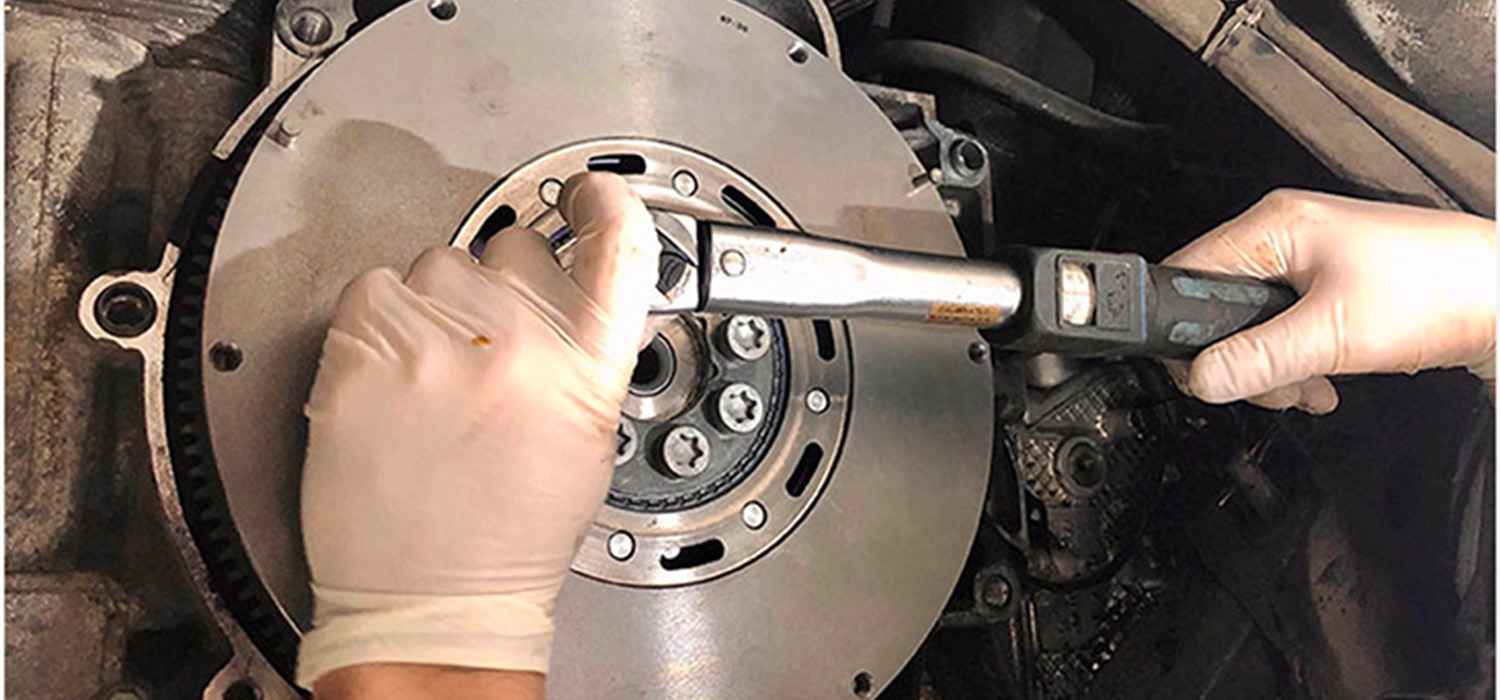
The seal sits at the engine and transmission interface. Reaching it commonly requires powertrain support and substantial separation or lowering of the transmission, but the route varies between transverse and longitudinal layouts, front-wheel drive and quattro, manual, conventional automatic and dual-clutch gearboxes. Exhaust, shafts, subframe, cooling connections, wiring, mounts or other surrounding components may be involved on some vehicles and not on others.
Once access is established, the old seal or carrier must be removed without scoring the crankshaft or damaging the mating surface. The sealing surface, carrier position and surrounding area are inspected. The replacement is installed at the specified orientation and depth using the correct procedure for that engine family. A rolled lip, contaminated surface, unsuitable sealant, improvised leverage or incorrect fastening can create an immediate repeat leak.
Part fitment
VIN and codes confirm the seal, carrier, production split and associated hardware before dismantling.
Surface condition
The crankshaft contact area and carrier face are assessed rather than hidden by a new component.
Controlled support
The engine and transmission are supported according to the access route, with vehicle stability protected throughout.
Specified assembly
Fastener sequence, one-time hardware, fluids, seal orientation and any curing requirement follow the exact application.
Configuration changes the job
Audi model, engine and drivetrain differences
An Audi model name does not identify one rear main seal or one access method. Generation, engine orientation, gearbox family, drivetrain, performance equipment and previous powertrain replacement can all change the installed arrangement.
A3, Q2, Q3 and TT
These ranges commonly include transverse layouts, but engine generation, front-wheel drive or quattro, manual or dual-clutch gearbox and production changes still alter fitment and access. An online part listed only by model name is not enough.
A4 through A8
Longitudinal packaging, several petrol and diesel engine families, front-wheel drive or quattro and different automatic transmissions create distinct access plans. Higher-engine leaks can also travel along the rear of the engine before appearing at the bellhousing.
Q5, Q7 and Q8
Larger quattro drivetrains and SUV packaging can add surrounding access considerations. Engine, gearbox, exhaust, shaft and support arrangements must be checked against the VIN and fitted vehicle rather than assumed from body shape.
S and RS models
Performance engines can have different cooling, exhaust, mounting and drivetrain packaging. The seal decision still begins with leak tracing, while the removal and verification plan reflects the exact performance configuration.
Hybrid and electric models
A plug-in hybrid combines a combustion engine with high-voltage systems and may require additional isolation procedures. A battery-electric Audi has no engine rear main seal, so a reported fluid leak must be classified under a different system. The badge alone does not reveal which case applies.
The VIN is the starting point, not always the final answer. Engine and gearbox codes, production split, PR option codes and direct inspection may still be needed, particularly if an engine or transmission has previously been replaced.
Safe-to-drive decision
Know when the car should remain stopped
A suspected rear main seal leak ranges from old dampness to rapid oil loss. Severity and oil-pressure information matter more than the assumed component name.
Stop the engine and arrange recovery
Stop as soon as it is safe if a red oil-pressure warning appears, the level falls rapidly, a large fresh pool forms, smoke rises from the engine or underbody, oil reaches the exhaust, or abnormal engine noise accompanies the warning. Continued running can turn a contained leak into lubrication damage or a fire risk.
Do not crawl beneath a roadside vehicle, touch hot or moving components, or keep restarting the engine to see whether the warning disappears.
Ask before a short inspection trip
Light dampness with a stable level, no pressure warning, no smoke and no oil on hot parts may allow a short direct trip for inspection, but that is conditional guidance rather than a guarantee. Follow the correct Audi oil-level procedure and oil specification for the vehicle.
Do not overfill, add seal-swelling products or repeatedly top up without finding the source.
Scope before quotation
What affects repair time and cost
We do not present one price or duration as valid for every Audi. Diagnosis, access and connected findings determine the scope.
Leak certainty
Old residue may need cleaning and repeat observation before major access can be approved.
Powertrain layout
Transverse or longitudinal engine position, gearbox family and front-wheel drive or quattro change removal work.
Seal or carrier
The specified part may be a sealing element, carrier assembly or application-specific arrangement with distinct installation needs.
Required hardware
Single-use fasteners, mounts, seals and fluids disturbed during access depend on the documented procedure.
Previous repairs
Damaged threads, poor sealant use, surface marks or a changed engine or gearbox can alter the plan.
Connected findings
Clutch contamination, flywheel condition, gearbox-side leakage or crankcase ventilation work requires separate evidence and approval.
Testing and adaptation
Post-install checks, fluid-setting procedures and configuration-specific basic settings add work only where applicable.
Parts identification
VIN, engine, gearbox and production information affect fitment and availability. The part should be confirmed before access begins.
Proof after installation
Post-repair verification
Completion is not defined by fitting a new seal. It is defined by a dry repair area, correct fluid levels, intact connected systems and a result that holds under appropriate operating conditions.
Faults created during disconnection or access are reviewed in context rather than cleared without explanation. Alignment, coding or adaptation is not automatically required for every rear seal replacement. Each is added only if the actual access route and fitted systems make it necessary.
Before the engine runs
Supports, fasteners, connectors, covers and fluid requirements are checked. The bellhousing and surrounding area remain clean enough to reveal new leakage.
During controlled operation
The engine is run under suitable conditions and the seal area is observed. Engine and gearbox fluid levels are set using the model-appropriate procedure.
After the road check
When the vehicle is safe to drive, a controlled road check is followed by another inspection for fresh oil, loose components, abnormal behaviour and fluid reaching hot or rotating parts.
Configuration-specific closeout
Gearbox basic settings, clutch adaptation, steering-angle checks or alignment are completed only when disturbed components and the vehicle procedure call for them.
Al Quoz 4 workshop
Audi rear main seal replacement near you
Our workshop in Al Quoz 4, Dubai is positioned for Audi owners coming from Al Quoz, Al Barsha, Business Bay and surrounding areas. A useful booking begins with the vehicle identity and the evidence you have already observed. Photos can help us understand severity and prepare the inspection, but they cannot prove the source or that the car is safe to drive.
If the oil-pressure warning is active, smoke is present or leakage is heavy, ask about recovery instead of driving over. Intermittent or slow leaks may require cleaning and a later recheck before a major repair is authorised.
Questions before approval
Audi rear main seal replacement FAQs
Does oil between the engine and gearbox prove the rear main seal has failed?
No. It makes the seal one possibility, but oil can travel from upper-engine seals, the vacuum-pump area, filter or cooler housing, sump seam or earlier spills. Gearbox fluid can also appear nearby. Cleaning and tracing the first fresh wet point is essential before major access work.
Can I keep driving with a suspected rear main seal leak?
That depends on the leak rate, oil level and warning signs. Stop for a red oil-pressure warning, rapid loss, smoke, burning oil, abnormal engine noise or a large fresh puddle and arrange recovery. Light dampness with a stable level may allow a short direct inspection trip after a cautious safety assessment.
Does every Audi require gearbox removal for this job?
The seal is at the engine-transmission interface, so substantial separation is commonly necessary, but the exact method varies by platform, engine, transmission and drivetrain. The VIN and fitted configuration determine whether surrounding drivetrain, exhaust, support or subframe work is involved.
Will a fault code identify a rear main seal leak?
There is no universal code that proves mechanical seal leakage. Codes may reveal connected concerns such as crankcase-ventilation or mixture behaviour on some engines, but physical inspection and leak tracing remain central. Every code must be interpreted in system context.
Should the PCV or crankcase ventilation system be checked?
Yes, when applicable. Abnormal crankcase pressure can contribute to leakage or repeat failure. Components and test methods differ by engine family, so the check should be configuration-specific rather than based on one generic pressure figure.
Are the clutch or flywheel included with rear seal replacement?
Not automatically. On a manual Audi, access allows inspection for oil contamination, clutch wear and dual-mass flywheel condition. Replacement requires a separate finding and authorisation. Automatic and dual-clutch arrangements have different connected parts and checks.
Does the car need alignment, coding or adaptation afterward?
Not in every case. Requirements depend on which components were moved or disconnected. Some transmission configurations may need basic settings or adaptation. Alignment may be appropriate if alignment-sensitive suspension or subframe positions were disturbed.
What determines rear main seal replacement cost and time?
Diagnosis complexity, engine orientation, gearbox type, front-wheel drive or quattro hardware, access requirements, the specified seal or carrier, required hardware, fluid needs and separately approved damage all matter. An accurate scope therefore depends on VIN identification and inspection.
Can seal additives or DIY replacement solve the problem?
Additives cannot confirm the source and may affect other seals or oil behaviour. Replacement usually requires powertrain support, transmission access, precise seal installation and model-specific reassembly. DIY work risks vehicle instability, crankshaft damage, incorrect sealing depth and missed contributing faults.
Decide from evidence
Book rear main seal leak confirmation
Tell us what you have observed and send the VIN, mileage, warning messages, oil-level change, recent repairs and any clear photos. We will prepare an Audi-specific inspection at Al Quoz 4 and explain whether the rear main seal, another engine-oil source or a transmission-side issue best fits the evidence.