Wheel & tyre
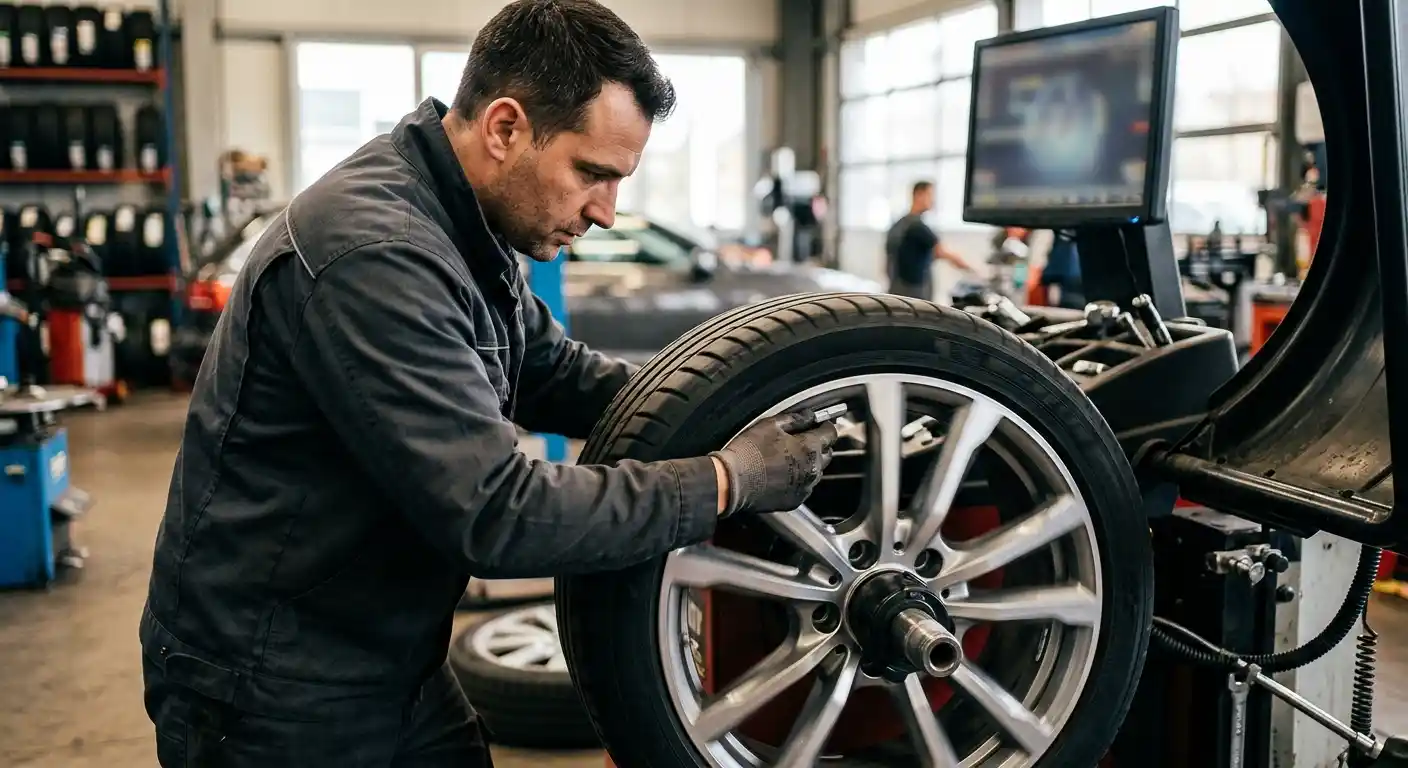
Pressure, wear, damage, balance, runout, hub seating and bearing condition.

A shake at idle, a steering-wheel tremor at speed and a shudder under acceleration do not point to the same repair. We reproduce the symptom, map when and where it is felt, test the relevant system and explain the evidence before parts are recommended.
“The car vibrates” is a useful starting point, but not a diagnosis. A vibration tied to engine rpm can remain while the vehicle is stationary. A road-speed vibration changes as the car accelerates even if the gearbox holds a steady engine speed. A braking pulse appears only when the brakes are applied. An acceleration shudder may arrive only when torque passes through an axle, joint, mount or driveline component.
Our Audi vibration diagnosis in Dubai separates those patterns before a repair route is chosen. The technician records where the movement is strongest—the steering wheel, seat, floor, pedals or body—and whether it appears cold, hot, in Drive, on a particular road surface, through a narrow speed band or under load. That prevents unrelated parts from being grouped into one vague quotation.
Vibration can come from a simple tyre condition or from interacting issues such as wheel runout, worn suspension joints and poor alignment. The purpose of diagnosis is to identify the source that is active now and show which findings are urgent, which affect refinement, and which can be monitored.
This map is not a parts list. It shows how we choose the first test path and avoid confusing symptoms that feel similar from the driver’s seat.
| Pattern | Likely first checks | What confirms the route | Why guessing fails |
|---|---|---|---|
| Steering shake at cruising speed | Front tyres, wheels, balance, runout, hubs and joints | Road test plus measured wheel and hub condition | Balance alone cannot correct a bent wheel or tyre-force issue |
| Seat or floor vibration | Rear wheel assemblies, driveline and exhaust clearance | Location comparison under coast and load | A front-end repair may never touch the active source |
| Roughness stationary | Combustion quality, mounts, exhaust and accessories | Scan data, rpm response and load comparison | New mounts will not cure an engine running fault |
| Brake-pedal pulsation | Discs, hubs, calipers, bushes and fasteners | Runout measurement and brake inspection | Disc replacement can repeat if hub condition is ignored |
| Shudder under torque | Axles, CV joints, mounts and driveline | Acceleration/coast comparison and joint inspection | Wheel balancing may temporarily distract from a load-related fault |
| Speed-dependent hum with vibration | Tyres and wheel bearings | Surface comparison, load change and bearing checks | Tyre noise and bearing noise can imitate each other |

A vibration may travel through the Audi body and be felt far from its origin. That is why the inspection route follows operating conditions and measurements rather than the place that happens to feel noisy or rough.
Pressure, wear, damage, balance, runout, hub seating and bearing condition.
Disc/hub runout, caliper behaviour, bushes, arms, joints and alignment clues.
Combustion smoothness, hydraulic or active mounts, exhaust contact and accessories.
CV joints, shafts, supports, differentials and model-specific quattro components.
We note the exact onset and fade-out speed, then inspect tyres for irregular wear, separation or flat spotting and wheels for runout or damage. Correct balance is important, but the machine result must be interpreted alongside the physical condition of the wheel, tyre and hub. If the steering wheel moves, front assemblies receive priority; if the seat or floor moves, rear assemblies and the driveline become more relevant.
After correction, the same speed band is retested. That before-and-after comparison matters more than simply saying the wheels were balanced.
Brake judder can involve disc thickness variation, lateral runout, hub contamination, wheel-fastener issues, caliper behaviour or worn chassis bushes. We inspect the complete mechanical relationship instead of treating every pulse as “warped discs.” If replacement is needed, hub preparation and runout verification help stop the symptom from returning.
For dedicated brake work, see our Audi brake repair service.
An idle vibration can come from worn mounts, an engine running fault, exhaust contact or an accessory under load. We compare gear positions, air-conditioning load and engine temperature, then review scan data and visible movement. The order matters: an engine that is not running evenly can overload otherwise serviceable mounts.
When testing confirms the support system, the repair route may lead to Audi engine mount replacement.
Acceleration-only vibration directs attention toward inner CV joints, shafts, driveline supports, mounts and differential behaviour. We compare acceleration with steady cruise and coast-down, inspect joint play and boots, and use model-specific knowledge of the quattro layout. A fault that reacts to torque should not be diagnosed from a stationary inspection alone.
Loose or worn suspension components may produce instability, shimmy or delayed settling rather than a clean rhythmic vibration. Tyre wear patterns can also reveal geometry problems. Joints, bushes, dampers and fasteners are checked for play or damage, with alignment considered after the mechanical condition is known.
Related work is handled through Audi suspension repair and Audi wheel alignment.
A wheel bearing may change tone as vehicle load shifts in a gentle turn, while tyre roar can change dramatically with the road surface. We use those differences as clues and confirm them with a lift inspection. This keeps a noisy tyre from being mistaken for a bearing—or a bearing from being dismissed as normal road noise.
Stop driving and arrange assistance when the vibration is severe, the steering has changed suddenly, a wheel or tyre appears damaged, fasteners may be loose, braking performance is affected, there is a burning smell, fluid loss, grinding, or a red warning message. A vibration that began immediately after a pothole impact or wheel service also deserves prompt inspection.
A mild, stable symptom may allow a careful workshop visit, but remote advice cannot confirm safety. If the vibration is increasing quickly, avoid motorway speeds and heavy braking. Call us with the conditions and we can help choose the safer next step.
For broader fault guidance, the Audi problems hub explains how warning signs are routed across systems.
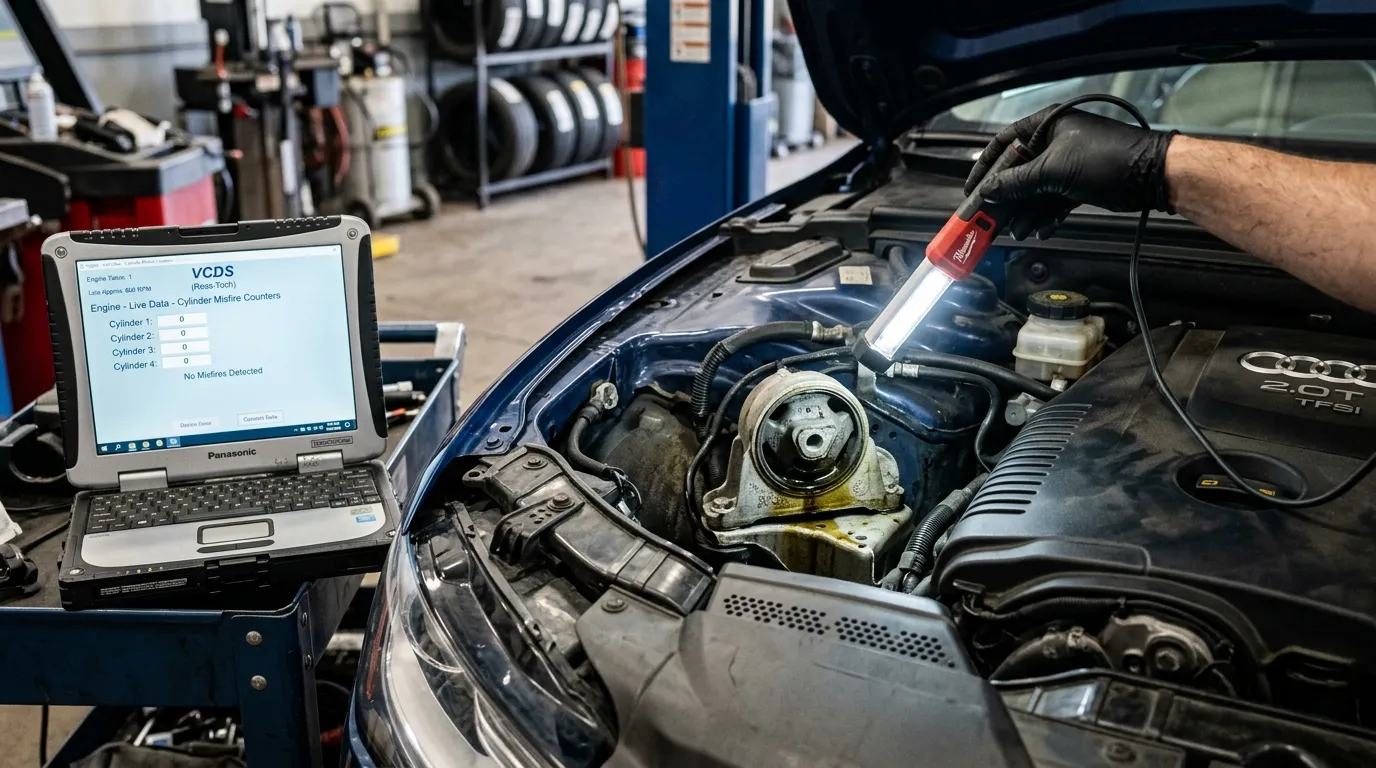
We document speed, rpm, load, temperature, road surface and where the vibration is felt.
A controlled road or stationary test confirms the symptom and separates engine speed from road speed.
Only relevant systems are checked using scan data, runout, play, mounting and condition evidence.
The approved work is completed and the original condition is repeated to verify the change.
We do not promise that every vibration can be priced from a message. Inspection time depends on how consistently the symptom can be reproduced and whether more than one fault is present.
The estimate identifies the component or condition supported by testing, not a bundle of unrelated possibilities.
Fasteners, alignment, fluids, calibration or paired replacement are explained when required by the repair method.
Items not causing the current symptom are kept separate so you can decide with context rather than pressure.
Costs vary by Audi model, component access, part choice and the evidence discovered. Our Audi repair cost guide explains why a diagnostic inspection is often the most economical first step.
Yes. The exact speed band, steering versus seat location, tyre condition and wheel/hub measurements help structure the test. The vehicle must be safe enough for a controlled road test.
No. Imbalance is common, but tyre defects, wheel runout, hub seating, bearings, joints, brakes and suspension play may feel similar. Balancing is one measurement, not a universal diagnosis.
The brake and hub relationship is a common route, but caliper operation and chassis bushes can contribute. We inspect and measure before recommending discs or other parts.
Yes, especially when load is applied at idle. However, engine smoothness and exhaust contact should also be checked so a running fault is not misdiagnosed as a mount problem.
Possible routes include inner CV joints, shafts, supports, mounts and differential or quattro driveline components. Comparing acceleration, cruise and coast behaviour is important.
Yes. A tyre may have structural irregularity, damage, flat spotting or excessive force variation, and a wheel or hub may have runout. Physical condition and mounting matter alongside balance.
Alignment mainly corrects geometry and tyre wear direction. It may improve instability, but rhythmic speed vibration normally needs wheel, tyre, hub or driveline checks as well.
Safety cannot be confirmed remotely. A stable mild symptom is different from a sudden severe shake, damaged tyre, altered steering or brake problem. If it changed suddenly, arrange prompt inspection.
It depends on whether the symptom is repeatable, the model and the systems involved. A consistent speed- or load-related symptom is usually faster to isolate than an intermittent one.
Yes. Verification should repeat the original condition where safe—such as the same speed band, braking event or engine load—to confirm the improvement.
The diagnostic logic applies across Audi saloons, SUVs, Sportback and performance models, while component layout and test procedures are adapted to the exact model and drivetrain.
Send the model, year, speed or rpm, where the movement is felt and what makes it better or worse. We will arrange an appropriate diagnostic visit and explain the next step after testing.