Mechanical damping
Check leakage, damping, shaft condition, spring seating, mount and bearing. A visible oil film is assessed differently from an active wet leak.

A leaking strut, knocking front end or unsettled ride needs a system-level check. We distinguish the strut from its mount, spring, links, arms, adaptive controls and air-suspension hardware before recommending parts.
A conventional strut combines the damper with a structural suspension assembly. An adaptive damper also has electronic control. An air strut replaces the coil spring with an air spring and connects to a wider pneumatic system. Those are different repair routes.
Check leakage, damping, shaft condition, spring seating, mount and bearing. A visible oil film is assessed differently from an active wet leak.
Inspect the mechanical assembly, wiring and stored faults. The replacement must match the vehicle equipment and may require basic settings.
Leak-test the air strut, line and fittings, then consider compressor duty, valve block and ride-height sensor data before condemning one unit.
Road feel alone is not enough. The inspection connects the driver’s complaint to repeatable evidence under the conditions that trigger it.
Active oil travel down the damper body, contamination and reduced control matter more than a light mist at the seal.
Excess bounce, nose dive, roll, wheel hop or poor recovery points toward lost damping, but tire pressure and springs are checked too.
Knocks while steering can come from the top mount or bearing; bumps can expose links, bushings, joints or loose hardware.
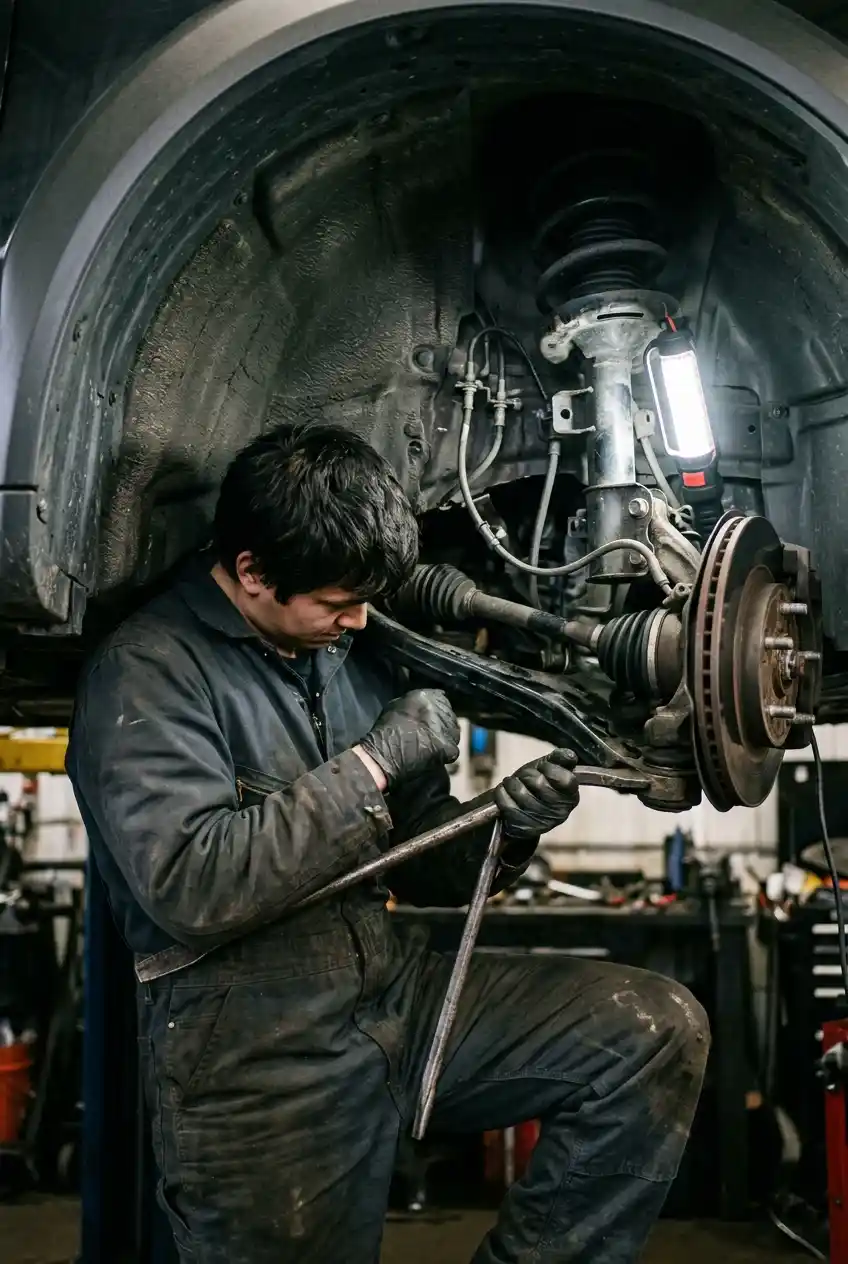
Noise, ride height and tire wear can come from neighboring components. This is why a complete Audi suspension diagnosis precedes the estimate.
Rubber isolation, bearing rotation and mounting hardware are checked for binding, separation and impact marks.
Leakage, dents, corrosion and damping response determine whether the strut itself has failed.
A broken coil, displaced isolator or damaged seat can change ride height and create metal-to-metal noise.
The boot protects the shaft; the bump stop limits travel. Deterioration is recorded during disassembly.
Play may come from stabilizer links, ball joints or suspension bushings, not the strut.
ABS, damper-control and ride-height connections must be protected and routed correctly during the work.
The answer depends on matched damping, condition, mileage, vehicle configuration and the cause of failure—not a blanket rule.
A recent matching unit, impact damage or a confirmed isolated fault may support one-side replacement after the opposite side is measured and inspected.
Two aged units with different damping or condition can affect braking stability, tire contact and ride consistency.
Alignment is recommended when geometry is disturbed, tire wear is present or readings are out of specification—not as an unexplained add-on.
We leak-test the air spring and connections, observe height loss, review pressure or level data where available, and assess compressor duty. A valve block, line, fitting or ride-height input can mimic strut failure.
Repeatedly forcing the vehicle to raise can overwork a compressor when a leak remains. The repair plan addresses the cause and the downstream load.
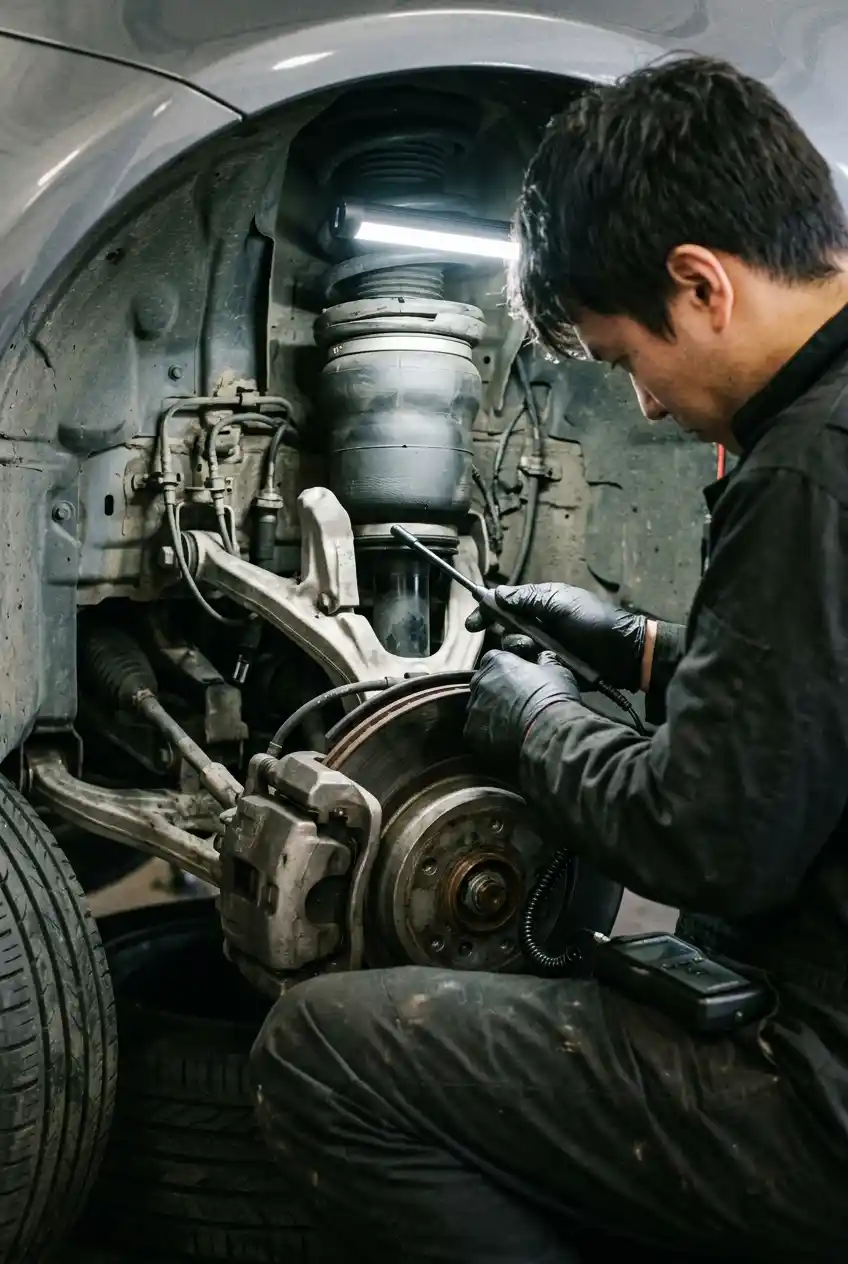
On electronically controlled systems, part selection follows the VIN and equipment code. Wiring condition, connector seating, scan results and any required calibration are part of completion evidence.
A warning that remains after mechanical work is not a finished repair. Related chassis stabilization faults must be traced to their own cause.
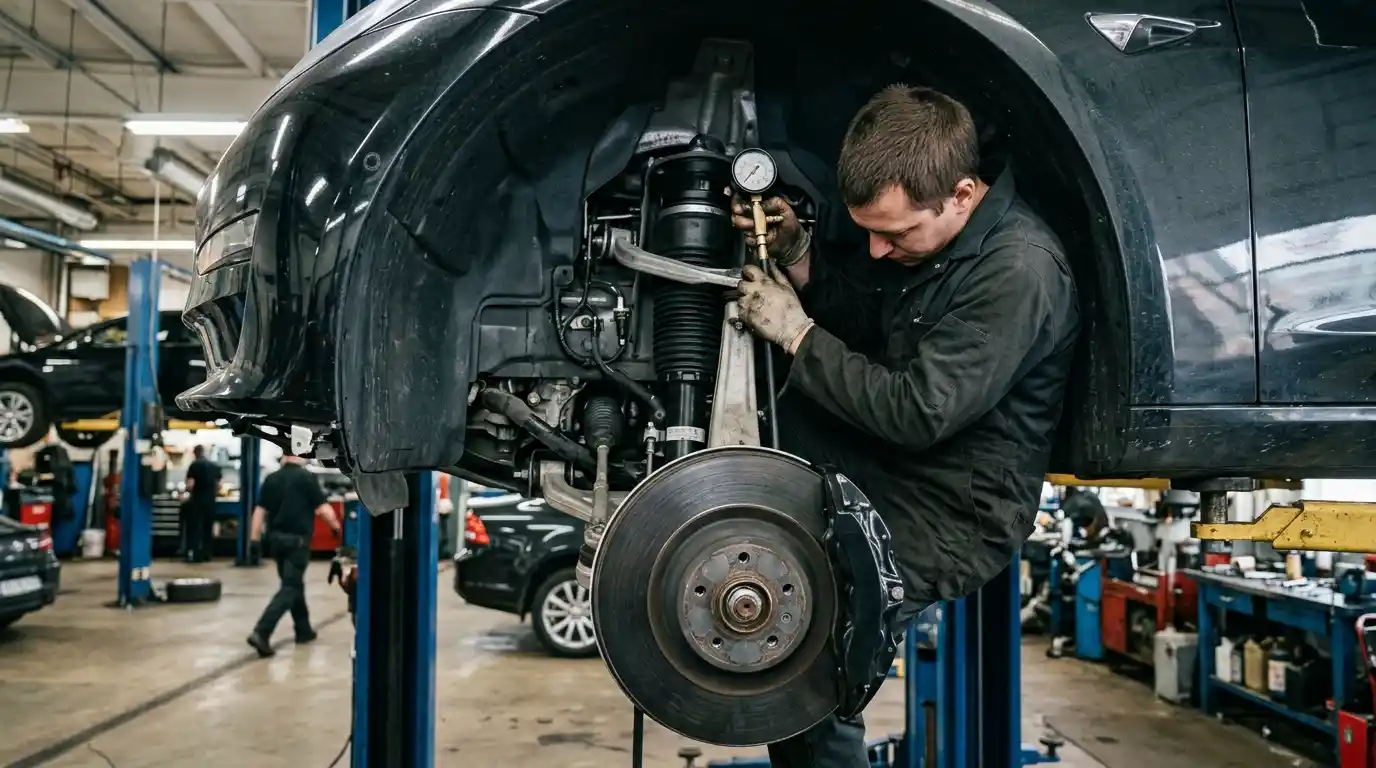
Confirm VIN, suspension type, axle, symptoms, warning state and any previous work.
Inspect ride height, leakage, play, tire wear, damping behavior and diagnostic data.
Use the correct assembly and hardware, protect lines and sensors, and tighten joints in the specified condition.
Complete required settings, check ride height, road-test the complaint and decide alignment from evidence.
| Cost factor | Why it matters | What should appear on the estimate |
|---|---|---|
| Suspension specification | Conventional, adaptive and air assemblies use different parts and procedures. | VIN-matched system and exact axle/side. |
| Related components | Mounts, bearings, boots, stops, springs or links may be worn separately. | Inspection evidence and itemized parts. |
| One side or pair | Condition matching changes the approved scope. | Opposite-side findings and reason for the decision. |
| Calibration and alignment | Some systems need settings; geometry may be disturbed. | Required procedure, measurements and completion check. |
For budgeting context, see our Audi repair cost guide. A reliable quote still requires the VIN and inspection findings.
Excess bounce, nose dive, body roll, poor recovery after bumps, uneven tire wear, knocking and active fluid leakage can indicate strut trouble. Each symptom also has other possible causes.
A light film and an active leak are not the same. If handling is unstable, the vehicle sits low, the spring is displaced or tire contact is affected, stop driving and arrange inspection.
Not automatically. Pairing depends on age, damping match, condition, specification and the cause of failure. The opposite side should be assessed before approval.
It is commonly appropriate when geometry has been disturbed or measurements are outside specification. We make the decision from the suspension design and alignment readings.
No. An air spring leak, line, fitting, compressor, valve block, ride-height sensor, wiring or control fault may cause similar symptoms.
Tell us which corner is noisy or low, when it happens and whether the car has standard, adaptive or air suspension. We will map the evidence before parts approval.
Independent Audi specialist workshop in Dubai. Audi model names are used for service identification; no affiliation with Audi AG is implied.