
Gear selector repair · Dubai
Audi Shifter Replacement in Dubai
Audi shifter replacement may involve a worn knob, a damaged release mechanism or the electronic selector. We check the lever, dashboard range and gearbox response before recommending parts. Describe what happens when you select a gear and arrange an inspection in Al Quoz 4.
Quick answer
Which part needs attention?
The knob, selector and gearbox do different jobs. We identify which one causes the symptom before recommending Audi shifter replacement.
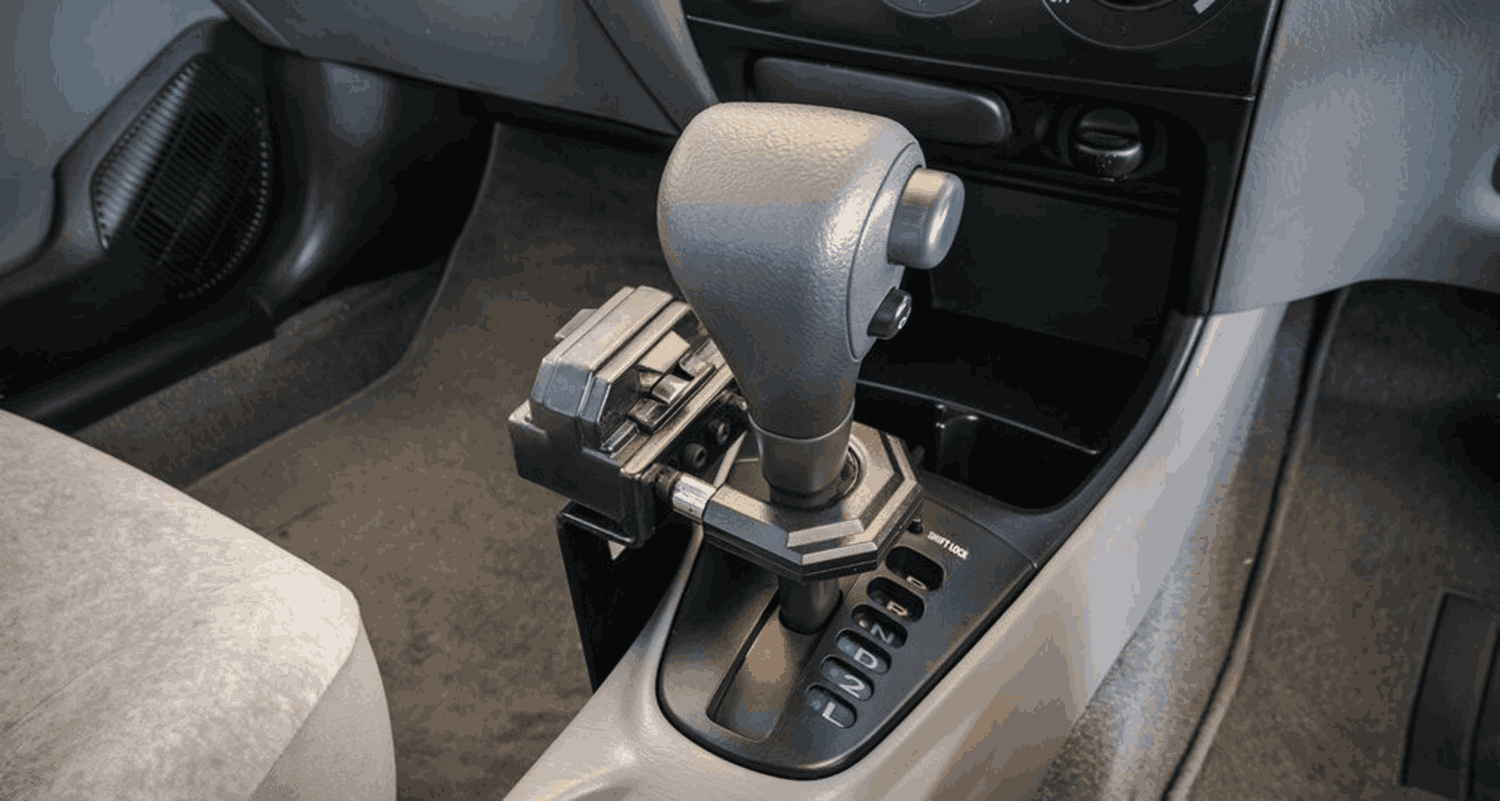
Knob and boot
Replace worn or loose trim when gear selection works normally. Check the clips, release button, wiring and exact fit before ordering.
Selector assembly
Check the gate, release mechanism, position sensing and shift lock. Replace the complete unit only when testing confirms that scope.
Transmission system
If the requested gear is recognised but engagement is delayed or harsh, investigate the transmission rather than replacing the cabin selector.
Symptoms are not verdicts
Match the symptom to checks
| Customer symptom | Possible causes | Confirming evidence |
|---|---|---|
| Cannot move out of Park | Brake-switch input, low voltage, shift-lock solenoid, release mechanism, selector electronics, wiring or vehicle interlock condition | Brake-light operation, module data, voltage, command and mechanical-release inspection |
| Lever moves but display shows another range | Position sensor, selector electronics, cable adjustment where fitted, wiring, coding or transmission range recognition | Requested versus recognised position, linkage inspection and related fault codes |
| Stiff, loose or noisy lever | Spilled liquid, damaged gate, worn bushing, broken trim, cable friction, foreign object or internal selector wear | Physical travel inspection with the powertrain safely secured and connected components checked |
| Delay after selecting Drive or Reverse | Transmission fluid condition or level, mechatronic control, clutch or internal fault, mount movement, or selector command issue | Selector data plus gearbox-specific pressure, fluid, adaptation and mechanical diagnosis |
A photograph of the message helps identify the complaint. Keep the full scan report if available, including which module stored the code and whether it was current or intermittent. A code description naming the selector does not prove the whole assembly has failed.
Safe-to-drive decision
When to arrange recovery
Do not drive if the selected range and instrument display disagree, the vehicle moves unexpectedly, Park does not hold, the lever is loose enough to select the wrong range, a transmission warning is accompanied by harsh or absent engagement, or the car cannot be secured. Arrange recovery and state whether the selector is stuck in Park.
If the concern is limited to a worn knob or boot and every range selects normally, the vehicle may remain usable while replacement is planned. A stiff lever, intermittent Park release or incorrect display should be inspected promptly because the condition can worsen. Never defeat the interlock or rely on an emergency release for normal use.
Tell us before collection
- VIN, model year, mileage and gearbox if known
- Exact dashboard warning and displayed range
- Whether brake lights operate
- Whether the lever moves and whether the car engages
- Conditions when the fault occurs
- Recent battery, console or transmission work
- Safe video of the selector and display
Keep the parking brake applied and do not stand in the vehicle’s path while demonstrating the fault.
Connected-system map
Follow the selector command
Brake and interlock
Check the brake-pedal signal and Park-release conditions. A brake-switch or interlock fault can feel like a jammed lever.
Power and wiring
Test voltage, supply, grounds and connectors. Low power or a communication fault can interrupt an otherwise serviceable selector.
Cable or linkage
Where fitted, check adjustment, attachment and free travel. Electronic shift-by-wire selectors require a different inspection.
Range recognition
Compare the lever position, dashboard display and transmission data. Disagreement needs signal and mechanical checks.
Console and switches
Inspect release switches, illumination and nearby wiring. Liquid spills, loose trim and earlier console work can affect operation.
Gearbox response
Confirm that the transmission responds to the recognised request. A correct command with poor engagement needs gearbox diagnosis.
Inspection sequence
Evidence before a parts order
The technician records the exact condition: ignition state, brake-pedal input, displayed range, warning text, temperature, recent battery or console work, and whether the vehicle actually engages. A safe reproduction matters because a complaint that occurs only on an incline or after heat soak can be missed in a quick workshop check.
Visible trim damage, liquid residue, loose components and foreign objects are checked first. Brake-light operation and relevant interlocks are verified. A diagnostic scan reviews selector, transmission, gateway and power-supply information. Live data compares the driver’s request with the positions recognised by the vehicle. Where applicable, the cable or linkage is inspected for attachment, alignment and free travel.
Electrical testing checks supply, ground, wiring and connector condition under realistic load. Only after the command path and gearbox response are separated can the repair be assigned to a knob, boot, release mechanism, selector assembly, cable, wiring repair, coding requirement or transmission system.
Liquid contamination deserves its own inspection because residue can affect switches, position sensing and connectors gradually. Cleaning visible trim does not prove that electronics beneath the console are undamaged. Where a fault is intermittent, the technician considers temperature, vibration and lever direction rather than repeatedly clearing codes. Mechanical force is compared in each gate position so a local obstruction is not confused with cable drag or an electronic interlock.
Workshop replacement sequence
Replacement, step by step
Secure
The vehicle is prevented from moving and electrical systems are managed for the fitted selector and interlock arrangement.
Protect trim
Console surfaces are protected and removal points identified to avoid broken clips, scratches or damaged wiring.
Disconnect
Connectors, cable or linkage and fasteners are documented and released using the configuration-specific method.
Compare
Part revision, mechanical travel, connectors and mounting are checked before the replacement is installed.
Configure
Coding, component protection, adaptation or basic settings are completed only where the installed system requires them.
Prove
Interlock, display, every selectable range, actual engagement and the original symptom are retested before handover.
DIY removal can damage brittle trim, wiring, release mechanisms or selector calibration. Forcing a lever out of Park can also allow unexpected vehicle movement. An emergency release is for controlled recovery according to the owner information, not a permanent repair. Workshop support is appropriate when the vehicle cannot be secured, electronics are involved or console access is unclear.
Fitment differences
Match the installed selector
Model and gearbox
Confirm the generation and gearbox type. Manual, S tronic, tiptronic and electric drivetrains use different selector mechanisms and operating logic.
VIN and option codes
Match the VIN, production date, gearbox code and relevant PR codes. Interior finish, connectors and mounting must suit the installed console.
Electric and hybrid
Check range command, readiness and interlocks using the correct drivetrain procedure. Hybrid operating states also affect how the fault is reproduced.
Revisions and retrofits
Check the fitted part number, software and previous modifications. Similar-looking selectors may have different switches, illumination or compatibility requirements.
Manual selector differences
A manual lever needs different checks
A manual Audi with a loose or stiff gear lever needs its selector mechanism, cable or linkage and attachment points checked where fitted. The technician also considers whether the complaint changes with the engine running and whether clutch disengagement affects selection. Difficulty entering a gear can involve the clutch or gearbox, even when the driver first notices it at the lever.
A cosmetic gear-knob change does not correct a worn linkage, damaged bushing or incomplete clutch release. Conversely, play in a selector connection does not establish internal gearbox damage. The repair should follow the component that is actually worn or obstructed. Do not force the lever or continue trying to select a gear if the vehicle moves unexpectedly or cannot be controlled.

Post-installation requirements
Prove every required function
Required setup
Some trim-only jobs need no coding. An electronic selector may require coding, parameterisation, component-protection handling, basic settings or confirmation that the vehicle recognises every position. A mechanical cable may require correct adjustment. These requirements are tied to the actual configuration, not sold as an automatic package.
Check each function
Verification begins while the vehicle is securely controlled. The brake interlock, release button, key or ignition logic, gear-position display and all selectable ranges are checked. The reverse lights and parking behaviour are verified where relevant. Diagnostic faults are re-read after the system completes its checks. A controlled road test confirms that driver request and transmission response remain aligned.
Related gearbox work
Wheel alignment is not a shifter-replacement requirement. Gearbox adaptation is not automatically needed for a cosmetic knob or boot change. If diagnosis moves into transmission control, mechatronic or clutch work, those procedures belong to the separate gearbox repair scope. See our Audi gearbox repair service when the confirmed fault is beyond the selector.
Ask which component was replaced and which checks were completed. Mention if the original fault occurred only after parking, a hot journey or repeated selections. If that condition could not be reproduced, the handover should make the limitation clear rather than treating a cleared warning as proof. Report renewed warnings, unexpected movement or a mismatch between the selected and displayed range immediately.
Plan the job
Audi shifter replacement cost
Repair time depends on diagnostic complexity, intermittent behaviour, console access, trim condition, cable or electronic architecture, parts identification, coding and connected gearbox findings. Cost depends on the same factors. We do not treat a simple boot change and an electronic selector replacement as the same job or publish one range for every configuration.
For Audi shifter replacement, a lower parts price is useful only if the component is compatible and the job restores the required functions. A used selector may need compatibility and setup checks before purchase. Confirm the part’s condition and the terms offered for that particular supply, rather than assuming every replacement has identical support.
Questions before authorisation
Audi shifter replacement FAQs
Is the gear knob the same as the complete shifter?
No. The knob and boot are driver-touch trim components. The complete selector can include the lever mechanism, position sensing, shift lock, electronics, illumination and cable or communication connections. Loose trim and failed range recognition therefore need different inspections and should not receive the same parts quote.
Why is my Audi stuck in Park?
Possible causes include the brake-switch input, low voltage, shift-lock mechanism, selector electronics, wiring, release damage or another interlock condition. Brake lights and module data are useful first checks. Working brake lights are useful evidence but do not, by themselves, prove that every control module receives the correct brake signal.
Does delayed engagement mean the shifter is faulty?
Not necessarily. If the selector command is recognised correctly, delay can originate in transmission fluid, mechatronic control, clutch or internal gearbox operation. The request and response must be separated. A new lever will not correct a downstream fault when the existing selector sends the right request.
Can only the shift boot or knob be replaced?
Often yes when the problem is cosmetic and the parts are separately supplied. Exact interior colour, trim, switch integration, connector and fastening method still need to match the vehicle. Avoid ordering from appearance alone, particularly when an aftermarket knob or console has already been installed.
Will a replacement selector require coding?
Some electronic selectors require coding, parameterisation, component-protection handling or basic settings. A trim-only job may need none. The installed architecture and replacement part determine the requirement. Confirm the requirement before buying a used unit or assuming that an advertised part is ready to fit.
Can I use the emergency Park release every day?
No. It is intended for controlled recovery or specific emergency circumstances described in the owner information. It bypasses normal protection and does not repair the underlying fault. Tell the recovery provider that Park release is affected and follow the instructions for the exact vehicle.
Is a shifter fault safe to drive with?
Do not drive if range recognition is wrong, the car moves unexpectedly, Park does not hold or engagement is harsh or absent. Cosmetic wear alone is different if every function remains normal. Apply the parking brake and keep people clear of the vehicle’s path. Do not demonstrate an uncontrolled fault for a video.
What affects the repair time and cost?
The failed layer, selector design, console access, trim condition, cable or electronic system, part revision, coding needs and any separate gearbox fault determine the scope. VIN and inspection are required. Ask whether the first appointment is diagnosis only and whether an intermittent fault may require leaving the vehicle.
What should I send before booking?
Send the VIN, model and year, mileage, gearbox if known, warning text, displayed range, whether the brake lights work, recent repairs, interior photos and a safe video of the symptom. Record the symptom only when the vehicle is safely secured. There is no need to dismantle the console to prepare for booking.
Audi shifter replacement in Dubai
Book in Al Quoz 4
Send the essentials
Send your VIN, model year, console photos and warning message. Tell us whether the trim is worn, Park release fails or the selected gear does not engage. Include a short video only when the vehicle is safely secured.
Plan the next step
Parts must match the VIN, selector label and connector. If the car cannot move, tell us whether it is in Park, the steering is locked or recovery access is restricted.
Record when it happens
Note whether the fault occurs after starting, when warm or on an incline. Does pressing the brake change it? Share warning photos and previous inspection reports; keep the fault history intact.
Protect the selector
Keep liquids and heavy accessories away from the selector. Repair loose trim and use the parking brake on inclines. Replacement depends on symptoms and condition, with no universal interval.
Start with the selector symptom
Tell us what the lever does
Need Audi shifter replacement in Dubai? Send the VIN, model year, warning text and a safe photo of the console. Tell us whether the problem is worn trim, Park release, lever movement or gear recognition so we can plan the right inspection in Al Quoz 4.