
Cabin airflow repair · Al Quoz 4
Audi blower motor replacement in Dubai
No air, uneven fan speeds or a noisy cabin blower? Audi blower motor replacement starts with checking the motor, controller and air path. We identify the cause before approving parts, then test airflow and demisting after the repair.
Audi blower motor replacement is appropriate when testing confirms the motor or its serviceable assembly has failed. A controller fault, damaged connector or blocked cabin filter may need a different repair. A climate-panel fan symbol shows the request; it does not prove the blower is turning.
Begin with what you notice
Match the airflow symptom
No cabin airflow
The vents stay still at every requested fan speed. The inspection follows the fuse, supply, ground, controller and motor, while checking that the climate system is actually requesting operation.
Intermittent fan
Airflow disappears when the cabin is hot, returns after restarting or changes over bumps. That pattern can involve motor wear or an unstable connection. Record it before unplugging components or clearing faults.
Only some speeds work
Missing low speeds or a fan stuck on high can involve the regulator, resistor arrangement where fitted, command path or motor load. The correct circuit design determines the tests.
Weak air at the vents
A loaded pollen filter, restricted intake, slow motor or distribution-flap problem can reduce output. Note whether every vent is weak and whether fresh-air and recirculation modes behave differently.
Three connected parts
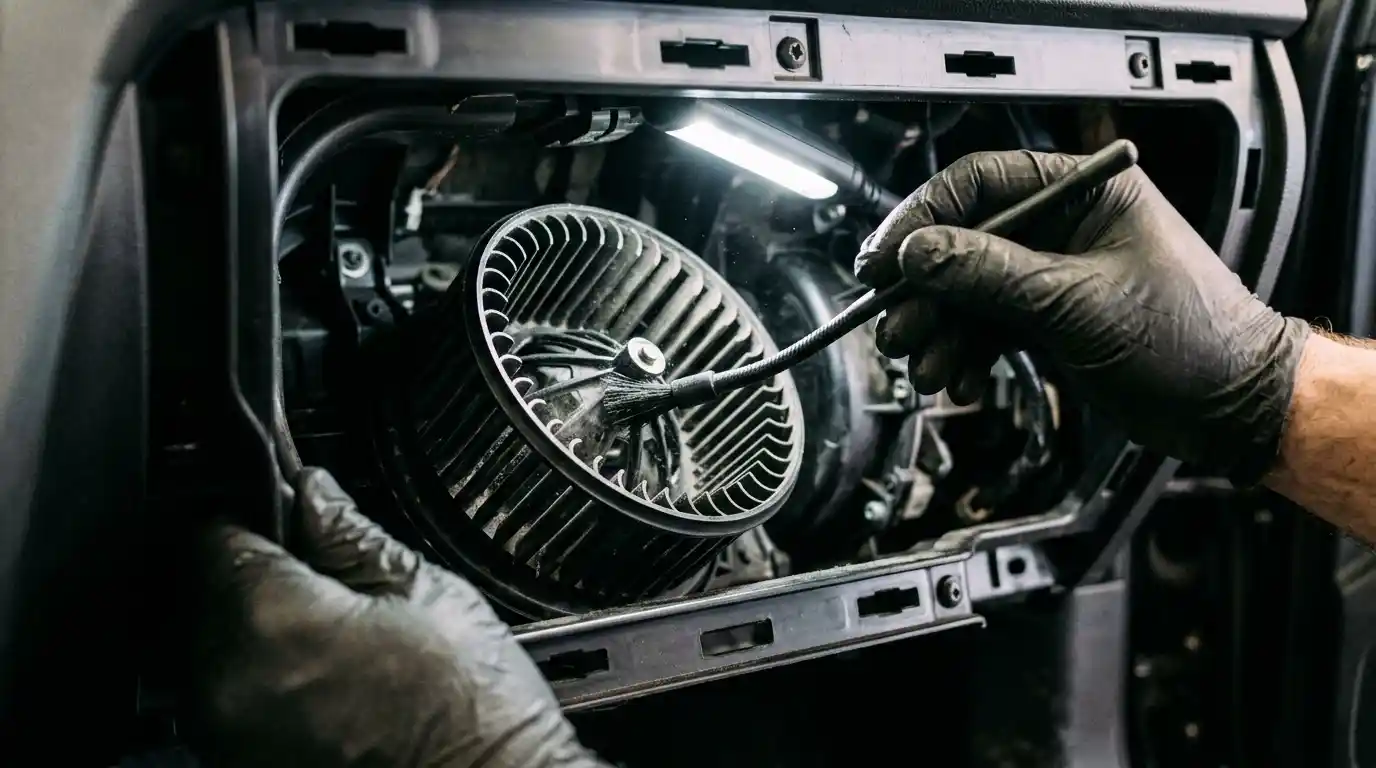
The motor is one part
Motor and fan wheel
The electric motor turns the cage-shaped fan wheel. Worn brushes where fitted, bearing drag, damaged blades or wheel contact can interrupt operation or create noise. A replacement must match the housing, connector and installed control arrangement.
Controller and wiring
The blower regulator or final stage manages motor output. Damaged terminals, high-resistance wiring, a poor ground, a fuse or a supply problem can imitate motor failure. Heat damage may affect more than one component.
Filter and air distribution
The cabin filter, intake, ducts and flaps determine where air can travel. Leaves, an incorrectly fitted filter or a flap fault can restrict the result even when the motor turns normally. Restoring motor speed alone will not clear an obstruction.
Noise and temperature clues
Separate three different complaints
Noise follows fan speed
A squeal, rumble or vibration that changes with fan speed points the inspection toward the blower area. Check debris, wheel balance, bearing condition and housing contact. Clicking mainly when air direction changes may instead involve a flap actuator.
Air blows but stays warm
The blower moves air; it does not make the refrigerant cold. Strong warm airflow calls for temperature and cooling checks. Our Audi AC repair service covers that separate diagnosis.
Air goes to the wrong vents
A blower can run normally while a distribution flap fails to move. Compare face, footwell and windscreen requests. Clicking or a failed flap response may lead to Audi actuator diagnosis, rather than a blower order.
From request to response
How we confirm the fault
The first test depends on whether the fan is silent, noisy, intermittent or unable to follow speed commands. A stored code narrows the inspection; it does not name a replacement part on its own.
Tell us about recent cabin-filter, glovebox, dashboard, battery or windscreen work. A fault that began immediately afterwards deserves an inspection of disturbed connections, ducts and any water-entry route.
Record and command
Record the affected speeds, ventilation modes, cabin temperature and timing of the fault. Read relevant climate and body-control fault records, then compare the requested fan setting with actual response. Automatic climate strategies can change fan speed normally, so manual speed requests help clarify the complaint.
Test the loaded circuit
Inspect fuse protection, power supply, ground and terminals against the vehicle wiring information. Voltage measured with the motor disconnected may look normal but fall under load. The technician checks the circuit in a way suited to its controller and command system, rather than relying on one unloaded reading.
Separate controller and motor
Where the circuit permits, compare command behaviour, controller output and motor current. A struggling motor can place an abnormal load on a regulator or connector. A failed regulator can also leave a healthy motor without usable power. Neither component is condemned simply because the other has already been changed.
Inspect the air path
Check the pollen filter, intake and accessible fan wheel for restriction, incorrect fit or debris. Compare fresh-air, recirculation and outlet modes, and check flap operation if airflow is directed incorrectly. The recommendation should explain which test confirmed the failed part and which alternatives remain relevant.
Choose the repair scope
Motor, controller or air path?
| Confirmed finding | Repair direction | What must be checked |
|---|---|---|
| Motor drags, stops or draws abnormal current | Replace the confirmed motor or serviceable assembly | Correct command and supply, wheel condition and any connected heat damage |
| Controller output is faulty | Replace the correct regulator where separately serviceable | Motor load, power, ground and command integrity |
| Burned or loose terminals | Repair the affected connector or wiring using a suitable method | Cause of heat, terminal retention and reliable operation under load |
| Filter or intake restriction | Correct the air-path problem | Filter fit, clean accessible housing and improved vent output |
| Flap fails to distribute air | Repair the proven flap or actuator fault | Requested position, actual travel and any applicable basic setting |
The quotation should separate diagnosis, the motor or controller, connector repair, filter work and access labour. Cleaning debris does not repair a worn bearing. Replacing a motor does not restore a burned terminal. Additional parts need their own evidence and approval; they are not automatically included in a blower package.
Once the part is confirmed
Audi blower motor replacement process
Protect and access
Protect the cabin, follow the required electrical isolation procedure and use the model-specific footwell, glovebox or HVAC access route. Record existing trim damage and inspect the connector before removal.
Remove and inspect
Remove the motor without damaging its housing, seal or fan wheel. Inspect the controller and air path, and remove accessible debris carefully without pushing contamination further into the HVAC case.
Match and install
Compare the approved replacement with the fitted part. Check the connector, wheel, mounting and seal arrangement. Fit it by the correct procedure, restore harness supports and refit ducts, filter covers and trim.
Operate and verify
Run the fan through its useful speed range and distribution modes. Check for noise, vibration, new warnings and lost nearby functions. A road check is used only if it helps reproduce the original complaint.
A blower replacement does not normally require opening the refrigerant circuit or draining engine coolant. Those operations belong in the scope only when the actual access procedure or a separately confirmed repair requires them. Dashboard removal is not assumed for every Audi; the installed HVAC layout determines the access.
Order for the fitted system
VIN, climate options and access
Generation and steering position
The same Audi model name can cover different blower housings, motors, connectors and access routes. Production date, steering position and climate equipment can affect fit. VIN and relevant PR option codes start the identification, while the fitted part number and connector confirm what is installed.
Front and rear ventilation
Multi-zone climate control does not mean every weak rear vent has a separate failed rear blower. Ducts, flap settings and, where fitted, an additional HVAC unit must be identified. Tell us whether the front, rear or one outlet group is affected before a part is ordered.
Hybrid and e-tron systems
Hybrid and battery-electric Audis still need cabin ventilation, but their climate equipment and operating states differ. High-voltage precautions follow the actual vehicle and access procedure. A low-voltage blower concern must not lead to casual work on electric compressors, heaters or orange-cabled components.
Earlier repairs and revisions
A visually similar motor may have a different controller relationship, wheel or mounting. Replaced dashboards, altered wiring and aftermarket parts need a physical check. Confirm whether the approved unit includes its regulator and seals, and whether separate clips or damaged connectors are required.
Visibility and electrical condition
When to stop using the blower
Stop the fan and arrange inspection if there is smoke, a burning electrical smell, repeated fuse failure, significant vibration or evidence that the fan wheel is striking its housing. Do not repeatedly replace a fuse or fit a higher-rated fuse to keep the motor running.
Loss of cabin airflow becomes a driving issue when the windscreen cannot be demisted. If you cannot maintain clear visibility in humid or wet conditions, stop safely and arrange assistance. Recovery may be appropriate when visibility or electrical safety is uncertain.
Test the original complaint
Airflow checked before handover
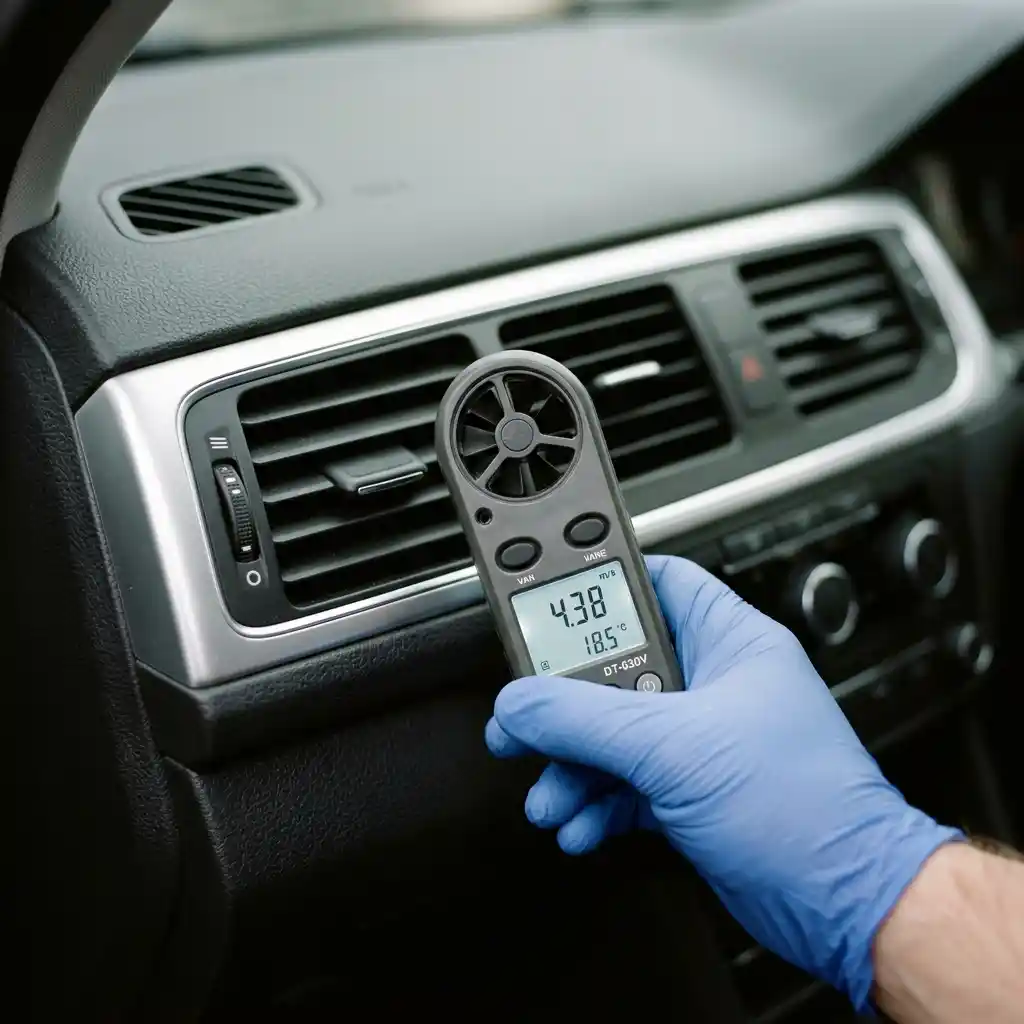
Audi blower motor replacement is not complete just because the fan starts once. The final test follows the complaint recorded at arrival, including speed control, noise, distribution and any heat-related interruption that can reasonably be reproduced.
- Speed response Check low through high requests and automatic operation where applicable.
- Air distribution Check face, footwell, windscreen and recirculation operation.
- Physical condition Check mounting, fan clearance, seal fit, harness support and refitted trim.
- Fault records Rescan relevant systems and separate returning faults from historic entries.
Many blower motors do not need coding. Controller replacement or disturbance of flap controls may require system-specific checks or basic settings. These are identified from the actual repair; wheel alignment and unrelated calibration are not standard blower services.
An itemised repair decision
What changes cost and time
Price the actual fault
Audi blower motor replacement cost depends on the motor specification, whether the controller is separate, access labour and any proven wiring or air-path damage. The estimate should state the part being replaced, related materials and the final checks. A regulator repair and a complete motor assembly are different jobs.
Parts availability and findings after safe access can change the plan. Ask which items can be reused and which need approval, including damaged terminals, clips, seals or a restricted filter. No single price or turnaround applies to every Audi climate configuration.
Allow time to reproduce it
An intermittent blower may operate normally during a short visit. Tell us whether it stops after the cabin heats up, after a long journey or only at a particular speed. The car may need to stay for observation so the circuit can be checked while the symptom is present.
Do not clear existing fault reports before arrival. A dated video, previous diagnostic result and a record of recent filter, battery or dashboard work can reduce uncertainty. They help target the test but do not guarantee an immediate parts decision.
Protect the repaired system
Keep the air path clear
Filter and intake
Replace the cabin filter according to the Audi maintenance requirements and its actual condition in dusty use. Check that it is seated correctly and that the cover closes properly. Keep accessible cowl and intake areas clear of leaves, but do not pour cleaning fluid into the ventilation intake.
Moisture and noise
Report water entry, chirping, changing fan speed or electrical smells early. Where moisture or an obstruction contributed to failure, the cause needs attention as well as the damaged part. There is no universal preventive replacement interval for a blower motor; condition and test evidence guide the decision.
At handover, confirm that the original symptom has been checked and ask what remains unresolved. Return if the same interruption, noise or smell appears again, and stop using the fan if electrical overheating is suspected. A new component is not a reason to ignore a continuing fault.
Audi Repair Dubai
Book an airflow inspection
Al Quoz 4 · Dubai
Send the symptom before travelling so we can discuss the inspection and whether the Audi should be driven.
Useful details before arrival
Your Audi
VIN, model year and mileage
Front, rear or particular vents affected
Fan behaviour
All speeds affected or only certain settings
Noise, smell, vibration or poor demisting
Fault history
Hot-cabin pattern and recent related work
Existing scan report or a safely recorded video
The Al Quoz 4 workshop serves Audi owners across Dubai. If visibility is poor or there is suspected electrical overheating, call before moving the car. Explain its location and access restrictions if recovery may be needed. We confirm the repair scope after inspecting the fitted ventilation system.
Questions before approval
Audi blower motor FAQs
Does no airflow mean the Audi blower motor is bad?
No. The fuse, supply, ground, controller, connector, climate command and motor all need consideration. A blocked filter can also make airflow seem absent or weak.
Why does the fan work only on high speed?
That pattern can involve the blower controller, wiring or control command. The exact design varies, so circuit testing is needed before replacing parts.
Can a cabin filter cause weak airflow?
Yes. A heavily restricted or incorrectly fitted filter can reduce output even when the motor turns normally. Air-path inspection belongs early in diagnosis.
Is a noisy blower safe to use?
Minor debris noise may not stop the car, but grinding, burning smell, fan-wheel contact or worsening vibration should not be ignored. Switch the fan off and arrange inspection if electrical heat is suspected.
Does blower replacement require dashboard removal?
Not on every Audi. Access varies by model and generation. Some motors are reached from a footwell or glovebox area, while other layouts require more extensive trim access.
Does the new blower need coding?
Many motors do not require coding, but some climate systems require fault clearing, basic settings or controller-related checks. The installed system determines the procedure.
How is an intermittent blower fault tested?
The technician records temperature and operating conditions, checks stored faults, monitors commands and voltage, and may test the circuit while the symptom is present.
What details help before booking?
Send the VIN, year, whether airflow fails at all speeds, any noise or smell, which vents are affected and whether the fault changes when the cabin is hot.
Restore usable cabin airflow
Tell us how the fan behaves
Send the VIN and whether the fan is silent, noisy, intermittent or stuck at one speed. We will use those details to prepare the blower-system inspection and explain the next step.